Japanese Education System: 6 Advantages and Limits
You can listen to the article instead of reading it. To do so, simply click the player below.
Japanese Education System: What Is It?
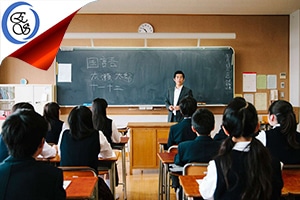
The Japanese Education System is often seen as one of the most disciplined and successful education models in the world.
Japan is known for high educational standards, strong school culture, and a serious approach to student development.
The country has also attracted attention with its results in international assessments such as PISA tests.
This success is not accidental.
It is connected to discipline, teacher quality, social responsibility, national awareness, and a long-term view of education.
The Japanese school system is generally based on a national curriculum delivered through public schools.
However, it is not only about textbooks, exams, and classrooms.
It also includes values such as responsibility, respect, collective behavior, cleanliness, punctuality, and social harmony.
In other words, school is not treated only as a place where students memorize information.
It is also a place where students learn how to live as part of society.
Japan’s modern development story also makes education especially important.
As is well known, Japan suffered devastating losses during the final period of World War II.
The atomic bomb attacks on Hiroshima and Nagasaki on August 6 and August 9, 1945, caused enormous destruction.
Despite this tragedy and the extremely difficult conditions that followed the war, Japan later became one of the world’s most developed countries and strongest economies.
Education played a major role in that recovery.
Of course, education alone does not magically rebuild a country.
But without a strong education policy, rebuilding a society after such destruction would be almost impossible.
Today, Hiroshima and Nagasaki are preserved as places of memory and warning.
They remind people of the destructive consequences of war and the danger of nuclear weapons.
These cities are also important tourist destinations visited by many people every year.
In Japan, student visits to Hiroshima and Nagasaki are used to create awareness about national memory, peace, and responsibility.
Students are expected to understand the cruelty of war and the cost of destructive technologies.
At the same time, they are encouraged to work hard so that their country never faces similar dangers again.
This is one of the clearest examples of how education can be connected to national consciousness.
Japan’s education approach is managed by the Ministry of Education, Culture, Sports, Science and Technology (MEXT).
The system includes different stages, from primary school to university and technical education.
You can also read more education-related articles in the education section of my website.
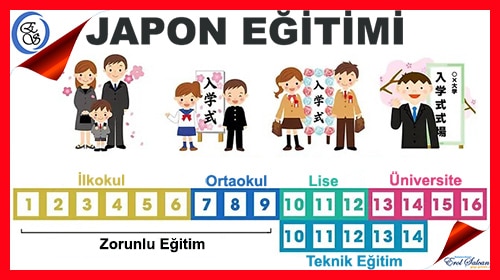
Japanese Education System Stages
The structure of education in Japan is organized in clear stages.
Each stage has its own purpose and prepares students for the next level.
This structure helps create continuity from childhood to adulthood.
Primary School
Primary school is a six-year education program for children between the ages of 6 and 12.
During this period, students take basic courses such as mathematics, science, Japanese, foreign languages, music, art, and physical education.
Primary school also plays an important role in developing social habits.
Students learn how to behave in class, respect others, take responsibility, and participate in school life.
In many schools, students also take part in cleaning classrooms and shared areas.
This may look unusual from the outside, but it teaches responsibility and respect for common spaces.
Middle School
Middle school is a three-year education program for students between the ages of 12 and 15.
At this stage, students receive more intensive education in subjects such as mathematics, science, English, and social studies.
The academic pressure also begins to increase during these years.
Students start preparing more seriously for future examinations and educational choices.
This stage can be productive, but it can also become stressful.
Because apparently childhood sometimes needs a deadline, a test score, and a small existential crisis.
High School
High school is a three-year program for students between the ages of 15 and 18.
Students can choose certain courses according to their interests and future plans.
Compared with earlier stages, they usually gain more freedom in terms of course selection and academic direction.
High school is also a critical period for university preparation.
Entrance exams are important, and students often spend serious time studying outside regular school hours.
Technical Education
After middle school, talented and interested students may be directed toward technical education.
This creates opportunities for students who want to develop practical skills.
Technical education also helps meet the need for qualified intermediate staff in different sectors.
This part of the system is important because not every student has to follow the same academic path.
A strong country needs engineers, researchers, technicians, craftspeople, and skilled workers at the same time.
University Education
Japanese universities have a strong reputation around the world.
Some of the best-known universities in Japan include the University of Tokyo, Kyoto University, and Osaka University.
University education is connected not only to academic achievement but also to social status and professional opportunities.
For this reason, university entrance can be highly competitive.
Students often prepare for this process for years.
This can bring success, but it can also create pressure that should not be ignored.
Japanese Education Model: 6 Advantages
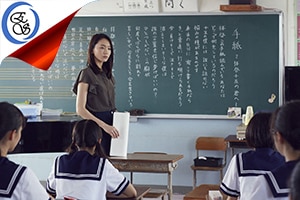
The Japanese education model has many advantages that make it remarkable for other countries.
Its success is not based on one single factor.
It comes from a combination of discipline, teacher quality, academic expectations, technology use, equality, and social responsibility.
Still, no education system is perfect.
So, while examining the strengths, it is also necessary to look at the limitations honestly.
1. Discipline in Education
Discipline in education is one of the most visible features of the Japanese approach.
Students are expected to behave respectfully in class and within the school environment.
This does not only mean obeying rules blindly.
It also means learning self-control, responsibility, order, and respect for others.
The system encourages students to study regularly and take their duties seriously.
This helps them develop habits that may be useful throughout life.
Discipline also supports classroom order.
When students understand the value of shared rules, teachers can spend more time teaching and less time trying to survive classroom chaos.
Let’s be honest, that alone sounds like a miracle in some schools.
2. Qualified Teachers
Teacher quality is another important advantage of the system.
Teachers in Japan generally have strong educational backgrounds and professional preparation.
They are expected to guide students not only academically but also socially.
This makes the teacher’s role broader than simply explaining a subject.
A good teacher becomes a model of discipline, responsibility, patience, and social behavior.
High expectations from teachers also help protect educational quality.
However, this also means that teachers carry heavy responsibilities.
For a system to remain successful, teachers must be supported as much as students.
Otherwise, even the best model can slowly exhaust the people who keep it alive.
3. Academic Success and PISA Tests
Academic success is one of the strongest areas of Japanese education.
Japanese students often perform well in mathematics, science, and reading skills compared with many other countries.
The country’s performance in PISA tests is frequently mentioned as proof of this strong academic structure.
This success is supported by regular study habits, clear expectations, disciplined classrooms, and a curriculum that values core skills.
Students are encouraged to take education seriously from an early age.
This creates a culture where academic effort is respected.
At the same time, academic success should not be the only measure of student development.
Creativity, communication, emotional balance, and problem-solving skills are also important.
A system that produces high scores but exhausted students would be a bit like building a beautiful bridge that everyone is too tired to cross.
4. Education Technology and Innovation
Education technology is another important part of Japan’s learning environment.
Japan is already known for advanced technology in many sectors.
This technological background also affects schools and learning processes.
Digital tools, laboratory equipment, educational software, and modern teaching materials can support students’ learning experience.
Technology can make lessons more interactive and help students understand complex subjects more easily.
It can also support distance learning, research, project work, and skill-based education.
However, technology is not a magic wand.
A tablet in every classroom does not automatically create better learning.
The real value appears when technology is used with good teaching methods and clear educational goals.
5. Equality in Education
The system also aims to support equality among students.
Students are generally encouraged to receive education without discrimination based on gender or family background.
This approach allows more students to develop their potential.
Equal access to basic education is important for social mobility.
It also helps create a stronger and more stable society.
When education is not limited to a privileged group, the whole country can benefit from more talent.
Of course, equality in theory and equality in practice are not always the same thing.
Family income, social pressure, private tutoring, and exam competition can still create differences between students.
For this reason, equality must be protected continuously.
6. Social Responsibility and Collective Awareness
One of the most interesting advantages of Japanese education is its focus on social responsibility.
Students are not only expected to study.
They are also expected to contribute to the school community.
Activities such as cleaning classrooms, serving meals, participating in group tasks, and respecting shared areas help students understand responsibility.
This approach teaches that public spaces belong to everyone.
It also reduces the idea that some tasks are “below” certain people.
Students learn that everyone has a role in maintaining order and cleanliness.
This kind of education can support humility, cooperation, and social awareness.
It is a valuable lesson, especially in a world where some people still cannot throw trash into a bin even when the bin is basically begging for attention.
Disadvantages of the Japanese School System
Although the Japanese school system has many strengths, it also has serious disadvantages.
These weaknesses should be discussed openly.
No model should be copied blindly just because it produces strong exam results.
Education is not a factory line.
Students are not products, and test scores are not the only proof of human development.
Pressure on Students
One of the biggest criticisms is the pressure placed on students.
The system expects a high level of academic achievement.
This can create stress, anxiety, and emotional difficulties.
Some students may feel that their entire future depends on exams.
This mindset can damage motivation and mental health.
A successful education system should challenge students, but it should not crush them.
Limited Support for Creative Thinking
Another criticism is that the system may not always encourage creative thinking enough.
Students are often prepared for exams and expected to master specific academic content.
This can strengthen discipline and knowledge, but it may limit creativity.
Problem-solving, independent thinking, artistic expression, and questioning skills are also necessary in modern life.
A country does not only need students who can answer questions correctly.
It also needs people who can ask better questions.
Minority and Cultural Differences
The system may also struggle with minority cultures and different identities.
When education strongly emphasizes unity and social harmony, differences can sometimes remain in the background.
This may make it harder for students to understand different cultures and perspectives.
Modern education should prepare students for a global world.
That requires not only national awareness but also intercultural understanding.
Competition Among Students
Competition is another major issue.
Students may feel that they must constantly prove themselves through exams and rankings.
This can reduce cooperation and teamwork.
It can also cause students to focus too much on academic achievement while ignoring other skills.
Healthy competition can be motivating.
Unhealthy competition, however, turns school into a survival game with homework.
Too Much Studying
Japanese students often spend long hours studying both at school and at home.
Additional lessons, exam preparation, and private study can create a heavy workload.
This may negatively affect physical and emotional health.
Students need rest, hobbies, friendships, family time, and personal space.
Without these, education may become efficient on paper but harmful in real life.
Exam-Centered Education
The system is often criticized for being exam-centered.
Students may be trained mainly to succeed in tests.
This can encourage memorization instead of deep understanding.
It may also limit creativity, critical thinking, and flexible problem-solving.
Exams are useful tools, but they should not become the whole purpose of education.
When everything becomes a test, learning slowly starts wearing a suit and looking depressed.
Social Pressure
Social pressure can also affect students strongly.
Students may feel pressure to fit in, follow expectations, and avoid standing out.
This can limit self-expression and independent thinking.
Belonging is important, but individuality is also necessary.
A good education system should protect both social harmony and personal development.
Declining Population
Japan’s declining population creates another challenge.
As the number of children decreases, some schools may close.
This can force students to travel longer distances to attend school.
It may also affect local communities, especially in rural areas.
Education planning becomes more difficult when demographic change accelerates.
Cost of Education
Education can also be costly for students and families.
Although public education is central to the system, private lessons, exam preparation, materials, and university costs can create financial pressure.
This may limit access for some students.
When success depends partly on how much a family can spend, equality becomes harder to protect.
Japanese Education System: Conclusion

The Japanese Education System is one of the most discussed education models in the world.
Its strengths are clear: discipline, teacher quality, academic success, technology use, equality, and social responsibility.
These elements helped Japan build a strong educational culture and support national development.
However, the system also has limitations.
Pressure, intense competition, exam-centered learning, limited creativity, social expectations, demographic challenges, and cost issues should not be ignored.
For this reason, the Japanese example should be studied carefully rather than copied directly.
The real lesson is not simply “study harder.”
The real lesson is that education must be taken seriously as a national priority.
A strong education model should develop knowledge, responsibility, creativity, emotional balance, and social awareness together.
Japan’s experience shows how powerful education can be in shaping a country’s future.
At the same time, it reminds us that even successful systems need constant improvement.
Respectfully,