Population Growth 2100: Future Impact
The Future Impact of Population Growth
Population Growth 2100 is one of the topics that has occupied my mind for a long time.
I have read and thought about this issue for quite a while.
The more I looked into it, the clearer one thing became: population growth is not only about numbers.
It is also about food, water, energy, migration, cities, economy, inequality, and the future of social order.
First of all, I should clearly say this.
I am not a biologist, demographer, or professional population scientist.
I am simply a person trying to understand what rapid population growth may mean for humanity.
Still, the results of my readings and observations are difficult to ignore.
When we talk about the future of population, we are also talking about the limits of the planet.
This does not mean we should immediately imagine people escaping to another Earth-like planet.
That may sound exciting in science fiction, but it is not a practical solution under today’s conditions.
For this reason, this article focuses on the world we already live in.
You can also read more future-focused articles in the science and technology section of my website.
So, let’s look at the issue step by step.
General View of Population Growth
The global population has increased dramatically in the last few centuries.
In the early 1800s, the world population was estimated to be around 1 billion.
Today, it has reached a level of several billions and continues to grow.
This rapid increase shows how much human societies have changed through medicine, agriculture, technology, sanitation, and economic development.
Lower child mortality, longer life expectancy, and better food production helped humanity grow faster than ever before.
However, growth also creates pressure.
More people means more demand for food, water, housing, energy, transportation, healthcare, and employment.
When population increases faster than planning capacity, the result can be chaotic.
Cities may expand without proper infrastructure.
Natural areas may shrink.
Food systems may become more fragile.
Energy demand may rise sharply.
In other words, the number itself is not the only problem.
The real problem is whether societies can manage that number responsibly.
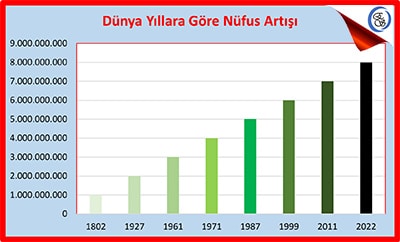
A population projection gives us a way to think about possible futures.
Such projections are not magical predictions carved into stone.
They are estimates based on current birth rates, death rates, migration trends, and demographic behavior.
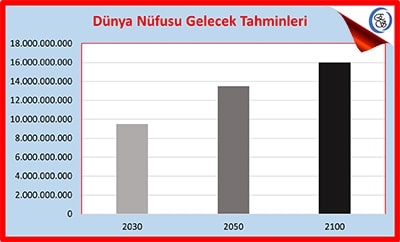
If growth continues without effective planning, the world may face much greater pressure by the end of the century.
This is why long-term projections should be treated seriously.
They are warning signs, not fortune cookies.
-
Turkey Population and Future Estimates
Turkey population has also changed significantly since the early years of the Republic.
In the 1927 census, Turkey’s population was around 13 million.
Today, it has reached a much higher level.
This increase reflects urbanization, improvements in healthcare, changing family structures, migration, and economic transformation.
However, Turkey’s demographic structure is not only about growth.
It is also about aging, regional differences, migration pressure, education, employment, and urban planning.
If population growth continues without careful management, cities may face heavier burdens.
Housing prices, transportation problems, infrastructure needs, and employment pressure may become more visible.
At the same time, rural areas may lose young people and economic vitality.
This creates a difficult balance between crowded cities and weakening rural regions.
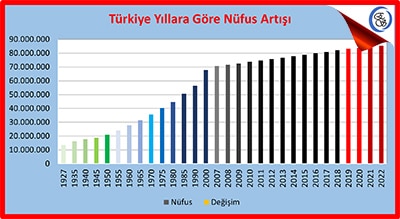
According to future estimates, Turkey may continue to grow in the coming decades, although the speed and structure of this growth may change.
The main issue is not only how many people live in the country.
The real issue is whether the country can provide enough education, jobs, housing, healthcare, clean water, and sustainable infrastructure.
A large population can be an advantage when it is educated, healthy, productive, and well organized.
But without planning, the same population can turn into a heavy burden.
This is the part where “more people means more power” becomes a dangerously lazy sentence.
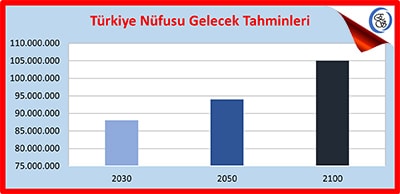
Population Growth and Resource Scarcity

When we talk about the future impact of population growth, perhaps the most important issue is resource scarcity.
As the number of people increases, demand for resources naturally rises.
Let’s start with the smallest social unit: the family.
Is the resource consumption of a family with one child the same as a family with eight or ten children?
Of course not.
I am not only talking about money here.
The issue is much more basic.
I am talking about essential needs such as air, water, food, shelter, and energy.
In Maslow’s hierarchy of needs, these are the basic requirements for survival.
Without them, no society can remain stable for long.
You can have the most advanced phone in the world, but it becomes a shiny brick if you do not have clean water and food.
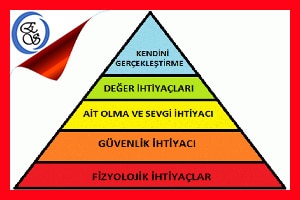
The planet’s resources are limited.
Water, fertile land, clean air, forests, fish stocks, minerals, and energy sources cannot be consumed endlessly.
Some resources can renew themselves, but only within certain limits.
If consumption exceeds renewal capacity, the system begins to weaken.
This is why population growth cannot be separated from consumption habits.
A smaller population with extreme consumption can create huge damage.
A larger population with poor planning can also create severe pressure.
The dangerous combination is high population, high inequality, wasteful consumption, and weak governance.
That combination is basically humanity ordering trouble with extra sauce.
Some thinkers have warned about this issue for centuries.
Thomas Malthus argued that population growth could eventually exceed the ability of the world to provide enough food.
Whether one agrees with all of his conclusions or not, the core concern remains important.
Human needs expand, but planetary limits do not politely move aside just because we are bad at planning.
Challenges Caused by Population Growth
One of the main challenges of population growth is the pressure it creates on food production.
More people require more food.
To produce more food, societies often need more agricultural land, more water, more fertilizer, more transportation, and more energy.
This can lead to deforestation, soil degradation, biodiversity loss, and higher emissions.
When natural habitats are converted into farmland or urban areas, wildlife loses space.
This can damage ecosystems that are already under pressure from climate change and pollution.
Food production is not the only challenge.
Water demand is equally critical.
Clean water is essential for drinking, agriculture, hygiene, industry, and energy production.
In regions where water resources are already limited, rapid population growth can increase competition and tension.
Water scarcity can also affect migration, public health, agriculture, and political stability.
Energy demand is another serious issue.
Growing populations need electricity, heating, cooling, transportation, and industrial production.
If this demand is met mainly through fossil fuels, environmental pressure increases.
If clean energy systems are not developed quickly enough, societies may face both energy shortages and environmental damage.
So the problem is not simply “more people use more things.”
The deeper problem is how those things are produced, distributed, and consumed.
Urbanization is another major consequence.
As populations grow, more people move to cities in search of jobs, education, healthcare, and better living standards.
This can create economic opportunities.
However, uncontrolled urban growth can cause housing shortages, traffic, air pollution, waste management problems, and pressure on public services.
Large cities can become centers of innovation, but they can also become giant stress machines with rent problems.
Healthcare systems may also come under pressure.
A growing population needs more hospitals, doctors, nurses, medicines, vaccines, and public health planning.
When healthcare capacity cannot keep up with demand, inequalities become sharper.
Education faces a similar challenge.
More children and young people require more schools, teachers, learning materials, and long-term investment.
Without strong education policies, a growing young population may struggle to become productive.
This is where population growth can become either an advantage or a crisis.
A young, educated, skilled population can support economic growth.
A young population without education and employment can create frustration, instability, and social pressure.
Economic Inequality and Migration Pressure
Population growth can deepen economic inequality when resources and opportunities are not distributed fairly.
In many regions, wealthy people consume far more resources than poor communities.
This means that the pressure on the planet is not created equally by everyone.
One person’s luxury consumption can be greater than the basic needs of many others.
This is why talking about population without talking about consumption is incomplete.
Migration is also closely connected to this topic.
People move when they cannot find safety, food, jobs, education, or hope where they live.
Many people in poorer regions dream of moving to developed countries because they believe life will be better there.
That dream is understandable.
However, if migration happens at very large scales without planning, it can create new pressure in receiving countries.
Housing, employment, public services, cultural adaptation, and political tension may become serious issues.
This does not mean migration is automatically bad.
It means migration must be managed humanely, realistically, and intelligently.
When population pressure, poverty, climate change, and conflict meet, migration becomes much harder to control.
Economic systems can also be affected by resource pressure.
If food, energy, or water become more expensive, the impact spreads across the economy.
Rising prices can reduce purchasing power, increase poverty, and create political dissatisfaction.
In extreme cases, competition over resources may contribute to unrest or conflict.
I sincerely hope humanity avoids that path.
But hope is not a strategy, sadly.
Overpopulation Solutions and Sustainable Development

When discussing overpopulation solutions, the goal should not be fear or panic.
The goal should be planning, education, responsibility, and long-term thinking.
Population growth can create risks, but it can also create opportunities when managed correctly.
The key is building systems that can support people without destroying the planet’s foundations.
One of the most important solutions is education.
Education improves awareness, employment opportunities, health outcomes, and social development.
It also helps families make more informed decisions about the future.
Especially women’s education has a strong connection with healthier families, better economic participation, and more balanced demographic behavior.
Another important issue is access to healthcare and family planning.
People should be able to make informed and voluntary decisions about family size.
This requires reliable health services, education, and social support.
Economic development also matters.
When poverty decreases and people gain access to education, security, and opportunity, demographic patterns often change over time.
That is why population policy cannot be separated from development policy.
Sustainable development is central to this entire discussion.
Societies need economic growth, but not at the cost of destroying water, soil, climate, and ecosystems.
Investment should be directed toward clean energy, efficient agriculture, water management, public transportation, recycling, and smart urban planning.
Infrastructure must be designed for future needs, not only today’s population.
Otherwise, cities become crowded first and thoughtful later, which is the most expensive way to learn anything.
Governments should also encourage industries with lower environmental impact.
Technology can help, but it cannot solve everything alone.
Better farming methods, renewable energy, artificial intelligence, smart grids, and water-saving systems can reduce pressure.
However, without responsible policies and social awareness, technology becomes only a fancy bandage on a deep wound.
Individuals also have responsibilities.
Reducing waste, using energy more carefully, supporting sustainable products, avoiding unnecessary consumption, and protecting public resources all matter.
No single person can solve global population pressure alone.
But billions of careless choices can definitely make the problem worse.
Population Growth 2100 and the Need for Planning
By 2100, the world may look very different from today.
Some regions may continue to grow rapidly, while others may face aging and population decline.
This means the future will not be the same everywhere.
Some countries may struggle with too many young people and not enough jobs.
Others may struggle with too many elderly citizens and not enough workers.
Both situations require planning.
Turkey and many other countries will need to think carefully about education, employment, migration, urbanization, agriculture, water, and energy.
Population policy should not be reduced to slogans.
It should be based on data, ethics, human rights, environmental limits, and economic reality.
Ignoring the issue will not make it disappear.
Nature does not care about political speeches, election slogans, or optimistic PowerPoint slides.
It responds to pressure, imbalance, and misuse.
Conclusion

In conclusion, population growth will undoubtedly have a major impact on our future.
A larger population can mean greater human potential, more workers, more ideas, and stronger economies.
However, it can also mean resource pressure, slower development, environmental stress, migration, inequality, and social tension.
The difference between opportunity and crisis depends on planning.
Population growth should not be ignored or treated as a simple statistical issue.
It is directly connected to how humanity will live in the coming decades.
The balance of nature should also not be disturbed carelessly.
Once ecological systems are damaged beyond repair, regret will not refill rivers, rebuild forests, or restore lost species.
For this reason, the future must be approached with responsibility.
Education, sustainable planning, resource management, technological innovation, and social awareness will all be necessary.
Respectfully,