

Problem Solving: 5 Practical Steps
What Is Problem Solving?
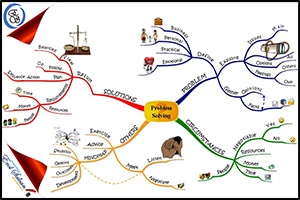
Problem Solving is a structured process used to understand a difficulty, evaluate alternatives, and apply the most suitable solution.
This process is not limited to business life.
It appears in daily life, education, technology, management, relationships, and almost every area where decisions must be made.
Sometimes the problem is simple, such as choosing the fastest route to a destination.
Sometimes it is complex, such as improving a company process, solving a technical failure, or deciding how to handle a difficult project.
In both cases, a systematic approach helps people avoid confusion.
Without structure, people may focus on symptoms instead of causes.
That usually creates temporary relief, not a real solution.
And yes, that is how many problems return later like an annoying software update you did not ask for.
In a related article, I also discussed analytical thinking, which is closely connected to this topic.
Analytical thinking helps people examine data, compare options, and make more reasonable decisions.
For a more academic perspective on this subject, you can also review the problem-solving resource shared by Hacettepe University.
Why Problem Solving Matters
Every person faces problems at some point.
Some people panic, some ignore the issue, and some immediately blame the nearest available human being.
None of these reactions is especially useful.
A better approach is to understand what is happening and move step by step.
In professional life, employers often value people who can solve problems calmly and effectively.
This is because workplaces constantly face delays, customer complaints, technical failures, planning errors, budget limits, and communication problems.
Someone who can analyze a situation and suggest practical action becomes valuable in almost any sector.
In personal life, the same skill helps people make better choices.
It can be used while planning finances, organizing time, solving family issues, studying for exams, or handling unexpected situations.
In short, this is not a skill reserved for managers, engineers, or consultants.
It is a basic life skill.
Problem Solving Skills
Problem solving skills include several abilities that support clearer thinking and better action.
These abilities can be developed through practice.
They are not magical talents given only to people who enjoy flowcharts a little too much.
Asking the Right Questions
The first useful skill is asking the right questions.
Instead of asking only “what happened,” it is better to ask “why did it happen,” “when did it start,” and “who or what is affected?”
Good questions prevent people from jumping to weak conclusions.
They also reveal hidden details that may change the whole situation.
Data Analysis and Observation
Another important skill is collecting and evaluating information.
Data may include numbers, reports, user feedback, observations, complaints, test results, or personal experience.
The goal is not to collect information endlessly.
The goal is to understand which information actually matters.
Too much irrelevant information can make a simple issue look like a government archive nobody wants to open.
Decision Making
Decision making is one of the most important parts of the process.
After evaluating the problem and possible alternatives, a person must choose a direction.
A perfect option may not always exist.
Sometimes the best choice is simply the most realistic one under current conditions.
Good decision making requires evidence, timing, responsibility, and a clear understanding of consequences.
Communication and Teamwork
Many problems cannot be solved alone.
In business life, solutions usually require cooperation between different people or departments.
Clear communication helps everyone understand the issue, the plan, and their own responsibility.
If communication is weak, even a good solution can fail during implementation.
That is why explaining the problem properly is almost as important as solving it.
Problem Solving Steps
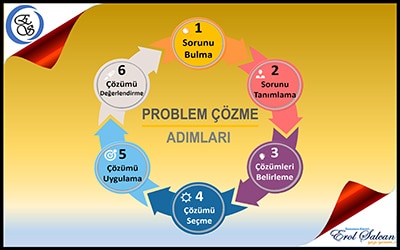
Problem solving steps help people move from confusion to action in a more organized way.
Although every issue has its own details, the following five-step structure can be used in many situations.
-
1. Defining the Problem

The first step is defining the problem clearly.
This may sound obvious, but many people skip it.
They start trying to fix something before they fully understand what is wrong.
Defining the problem means identifying what happened, when it started, how often it happens, who is affected, and why it matters.
It also means separating symptoms from causes.
For example, low sales may be a symptom.
The real causes may include poor pricing, weak marketing, customer dissatisfaction, supply problems, or changing market conditions.
Solving the symptom alone may hide the issue temporarily.
Finding the real cause creates a stronger solution.
This is where root cause analysis becomes useful.
Root cause analysis focuses on the underlying reason behind a problem instead of only dealing with visible results.
Tools such as the “5 Whys” method, fishbone diagrams, and process mapping can support this stage.
The better the problem is defined, the easier the next steps become.
-
2. Collecting Information and Analyzing Causes

After the problem is defined, the next step is collecting useful information.
This may include reports, statistics, interviews, customer feedback, technical logs, observations, or previous experiences.
At this stage, it is important not to rely only on assumptions.
Assumptions may be useful starting points, but they should not be treated as facts.
For example, a company may assume that customers are unhappy because prices are high.
However, feedback may reveal that customers are mainly frustrated by late delivery or poor communication.
Without data, the company might lower prices and still fail to solve the actual issue.
Information should be organized and interpreted carefully.
Patterns, repeated complaints, timing, frequency, and impact should be examined.
This makes the problem more understandable and prevents unnecessary action.
A calm analysis at this stage can save time, money, and nerves later.
-
3. Identifying Possible Solutions

After understanding the problem and its causes, the next step is identifying possible solutions.
This stage is about generating alternatives before choosing one.
It is usually a mistake to accept the first idea immediately.
The first idea may be good, but it may also be the mental equivalent of grabbing the nearest object during a fire drill.
Different perspectives can help create stronger options.
People from different departments, backgrounds, or experience levels may notice things others miss.
This is especially useful in complex problems.
Brainstorming

Brainstorming is a common technique used to produce many ideas quickly.
During brainstorming, ideas should first be collected without immediate criticism.
The purpose is to encourage creativity and prevent people from rejecting ideas too early.
After enough ideas are collected, they can be evaluated more carefully.
This method can reveal options that would not appear in a more restricted discussion.
However, brainstorming should not become random noise.
It works best when the problem is clear and the discussion has a practical goal.
Using SWOT Analysis
SWOT analysis can also be useful while evaluating alternatives.
This method examines strengths, weaknesses, opportunities, and threats.
It helps individuals or organizations understand internal and external factors that may affect a solution.
For example, a business may have strong technical knowledge but weak financial resources.
That difference can affect which solution is realistic.
-
4. Choosing and Applying the Best Solution

After possible options are created, the next step is choosing the most suitable solution.
This decision should be based on evidence, feasibility, cost, time, risk, and expected result.
A solution may look excellent in theory but fail in practice if resources are not available.
For example, hiring a large new team may solve a workload problem.
However, if the budget does not allow it, the solution is not realistic.
A smaller process improvement or automation step may be more practical.
After the solution is selected, implementation should be planned clearly.
Who will do what?
When will it be done?
Which resources are needed?
How will success be measured?
Without these answers, even a good decision can become vague and ineffective.
Implementation also requires communication.
People affected by the decision should understand what is changing and why.
Resistance often appears when people feel ignored or confused.
Clear explanation can reduce that resistance.
-
5. Evaluating the Result

The final step is evaluating whether the solution worked.
This step is often forgotten because people feel relieved once action is taken.
However, applying a solution is not the same as solving the problem.
The result should be measured against the original goal.
Did the problem decrease?
Did the same issue return?
Did the solution create new problems?
Were time, cost, and effort reasonable?
These questions help determine whether the process was successful.
If the result is not satisfactory, the process may need to return to an earlier step.
This should not be seen as failure.
Sometimes the first attempt only teaches what does not work.
That information is still useful, assuming nobody pretends the disaster was “part of the plan.”
Problem Solving Techniques
Different techniques can support the process depending on the type of issue.
Some problems require data analysis.
Some require creativity.
Some require teamwork, communication, or testing.
Cause and Effect Analysis
Cause and effect analysis helps identify why a problem occurs.
It can be used in business, education, production, technology, healthcare, and personal planning.
This technique is useful because it prevents people from dealing only with visible symptoms.
When the cause is understood, the solution becomes more accurate.
Trial and Feedback
Some problems cannot be solved perfectly on paper.
In those cases, a small trial may be useful.
A team can test a solution on a limited scale, collect feedback, and improve the method before wider application.
This approach reduces risk and allows learning through practice.
Prioritization
Not every problem has the same urgency.
Some issues are important but not urgent.
Others require immediate action.
Prioritization helps people decide what should be handled first.
This is especially important when time and resources are limited.
Trying to solve everything at once usually creates a beautiful mess with impressive confidence and terrible results.
Problem Solving: Conclusion
Problem Solving is a practical skill that can be used by everyone.
It helps people understand problems, analyze causes, produce alternatives, choose realistic solutions, and evaluate results.
The five-step process explained in this article provides a simple but useful structure.
First, the problem must be defined clearly.
Then information should be collected and causes should be analyzed.
After that, possible alternatives should be produced and compared.
The most suitable solution should then be applied with a clear plan.
Finally, the result should be evaluated honestly.
This approach can be used in work life, education, personal life, and many professional fields.
It also works well with analytical thinking, communication, teamwork, and creativity.
Problems will always exist.
The real difference is how we respond to them.
A calm, structured, and evidence-based approach usually creates better outcomes than panic, blame, or random guessing.
In short, solving problems is not about pretending everything is easy.
It is about facing difficulties with method, patience, and a little bit of mental discipline.
Respectfully,