

IoT Use Cases: 4 Key Areas
In this first article of the Internet Category, I thought it would be useful to talk about the Internet of Things.
Many years ago, technological products usually worked on their own.
Today, when these products connect to the internet, communicate with each other, and can be controlled from a central point, daily life becomes much easier.
This change is not limited to home appliances.
Connected-device systems are now used in homes, healthcare, industry, city management, retail, transportation, and many other areas.
These developments allow ordinary devices to become smarter, more efficient, and more useful.
IoT Use Cases help us understand how connected technologies can collect data, share information, automate processes, and support better decisions.
For a broader technical explanation, IBM describes the Internet of Things as a network of physical objects that use sensors, software, and connectivity to collect and share data.
Let’s look at the subject in a simple and practical way.
What Is the Internet of Things?
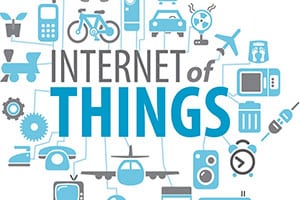
The Internet of Things, commonly known as IoT, is a technology concept that allows physical objects to connect to the internet and communicate with each other.
Through this connection, data sharing and remote control become possible between different devices.
A simple example is a smart thermostat.
Instead of manually changing the temperature, a user can control the system remotely through a mobile application.
The device may also use weather information, user habits, and indoor temperature data to manage heating and cooling more efficiently.
This same logic can be applied to many other areas.
A wearable health device can collect body data.
A factory machine can send performance information.
A traffic sensor can report congestion.
A smart refrigerator can monitor stored products.
The real value is not only connection.
The real value is useful data, automation, and better control.
Otherwise, connecting everything to the internet just because we can would be peak “technology went outside and forgot why.”
How This Technology Can Change Daily Life
Connected systems can change daily life by making routine tasks easier and more efficient.
They can reduce energy consumption, improve safety, support healthcare monitoring, increase industrial efficiency, and help cities make better decisions.
For example, a home can adjust lighting according to movement.
A security system can send a notification when unusual activity is detected.
A wearable device can warn the user when a health value is outside the expected range.
A factory can detect machine problems before they create production losses.
A city can monitor air quality, traffic flow, or noise levels through sensors.
These examples show why this technology is becoming more important.
It connects the physical world with digital systems.
That connection can create faster responses, better planning, and more efficient use of resources.
1. Smart Homes
One of the most common application areas is the home environment.
Smart home systems can help reduce energy use, improve comfort, and support security.
For example, a smart thermostat can allow users to control indoor temperature remotely.
It can also help save energy by adjusting heating or cooling according to need.
With developing weather forecast systems, heating and cooling units may operate according to specific local conditions.
This can make energy use more efficient.
Lighting systems can also be controlled remotely.
Users may turn lights on or off, adjust brightness, or create automatic schedules.
Security cameras, smart locks, alarms, and motion sensors can help improve home safety.
White goods may also communicate with each other.
Refrigerators, ovens, washing machines, dishwashers, lighting systems, garden irrigation systems, pet feeding systems, and door locks can all become part of a connected home structure.
A smart oven may one day identify ingredients, select the ideal temperature, and apply the correct cooking time.
With suitable robots, food preparation and cooking processes may also become more automated.
Another future possibility is inventory-aware storage.
A refrigerator or pantry cabinet could track which products are running out and suggest or place an order automatically.
This may sound futuristic, but many ideas that once sounded impossible are now sitting quietly in our pockets as mobile apps.
2. Healthcare and Wearable Devices
Healthcare is another important field for connected technologies.
Medical and wearable devices can help monitor patient conditions and support more effective care.
For example, a device that measures blood pressure or glucose levels can share information remotely.
This may help healthcare professionals understand a patient’s condition more clearly.
Real-time data collection can make medical follow-up more practical.
Wearable products such as smartwatches can collect information about heart rate, movement, sleep, oxygen level, and other health-related indicators.
When these values are compared with expected ranges, unusual results may be detected earlier.
In certain cases, doctors, relatives, or emergency support units could be informed when values go above or below safe limits.
This can be especially valuable for elderly people, chronic disease patients, and people who need regular monitoring.
Of course, healthcare data must be handled carefully.
Privacy, security, accuracy, and medical responsibility are extremely important.
A device can support healthcare, but it should not replace professional medical evaluation.
Technology can warn, assist, and measure.
Diagnosis and treatment still require qualified medical judgment.
3. Industry 4.0 and Production Processes
In Industry 4.0, connected systems can improve production efficiency and operational control.
Factories can monitor machines, production lines, materials, energy consumption, and equipment condition more effectively.
For example, a production machine can send performance data to a central system.
This makes it possible to detect problems before a complete failure occurs.
Maintenance teams may see early warning signs and take action earlier.
This can reduce downtime and prevent production losses.
Material and energy use can also be monitored.
If a production process consumes more energy than expected, the system can help identify the cause.
If raw materials are used inefficiently, managers can examine where waste occurs.
This supports cost control and process improvement.
Connected production systems can also help companies understand market expectations.
Data from production, demand, customer behavior, and sales can support better product planning.
In this way, Industry 4.0 is not only about machines talking to each other.
It is also about better decisions, faster responses, and smarter production planning.
Basically, the factory becomes less “guess and hope” and more “measure and improve.”
That is usually a good upgrade.
4. Smart Cities, Retail, and Connected Vehicles
Another major area includes city management, environmental monitoring, retail, and transportation.
These fields may look separate, but they all depend on collecting data from physical environments and using it for better decisions.
Smart City Management
City management can benefit from sensors and connected infrastructure.
For example, traffic flow can be monitored through road sensors and camera systems.
This information can help reduce congestion and improve traffic planning.
Environmental conditions can also be measured.
Air quality, noise level, temperature, humidity, and other indicators can be tracked in different parts of a city.
Municipalities can use this information to make better decisions about transportation, public safety, environmental control, and urban planning.
When city data is used correctly, public services can become more responsive.
For example, waste collection routes may be planned according to container fullness.
Street lighting may be adjusted according to movement or time.
Traffic lights may be managed according to real-time congestion.
These improvements may look small individually, but together they can create a more efficient urban system.
Retail Sector
The retail sector can also use connected systems to understand customers and manage stores more efficiently.
A store may analyze customer movement, product interest, shopping behavior, and inventory levels.
This can help improve stock management and reduce shortages.
For example, if a product is selling quickly, the system can warn the store before stock runs out.
If customers often stop near a certain shelf but do not buy, the store may review pricing, placement, or product information.
These systems can also support personalized campaigns and better store planning.
However, customer privacy must be respected.
Data collection should be transparent, secure, and compliant with legal rules.
Connected Cars and AI-Powered Devices
Connected cars are another important example.
A vehicle can share information about its condition, route, fuel or battery level, maintenance needs, and driving behavior.
This can help users monitor their vehicle and plan journeys more effectively.
It can also support maintenance warnings and safety features.
AI-powered devices can also automate many tasks at home, work, and in transportation.
For example, they may adjust settings, learn user habits, detect unusual situations, or suggest better actions.
When artificial intelligence and connected systems work together, daily tools can become more adaptive.
The key point is balance.
Automation should make life easier, not turn every object in the house into a tiny manager with Wi-Fi.
Future Potential
This subject has a very wide future.
More detailed information can be found through academic publications and reliable technology resources.
Each use area mentioned above can actually be discussed as a separate article.
Smart homes, wearable health devices, industrial automation, city sensors, retail tracking, connected cars, and AI-supported devices all deserve deeper analysis.
It would not be realistic to explain every detail in a single article.
Still, this overview shows the basic logic clearly.
Physical objects can collect data, share information, communicate with systems, and support automation.
When designed properly, this can improve comfort, safety, efficiency, sustainability, and decision-making.
However, security and privacy must not be ignored.
NIST’s Cybersecurity for IoT Program focuses on standards, guidelines, and tools that support safer connected products and environments.
Every connected device can become a potential risk if it is poorly protected.
Strong passwords, software updates, secure networks, data protection rules, and responsible design are important parts of this ecosystem.
A smart device is only truly smart when it is also safe.
Otherwise, it is just an expensive object waiting to become someone else’s remote control project.
Conclusion
IoT Use Cases show how connected systems can improve different parts of life and business.
In homes, they can support comfort, energy efficiency, security, and automation.
In healthcare, wearable and medical devices can help monitor important values and support better follow-up.
In Industry 4.0, connected machines can improve production, maintenance, and resource use.
In city management, retail, and transportation, sensor-based systems can support planning, service quality, and operational efficiency.
This technology will continue to develop as devices become smarter, networks become faster, and data analysis becomes more advanced.
The important point is to use these systems wisely.
Connection alone is not enough.
Useful design, security, privacy, and real problem-solving value are what make the difference.
So yes, this subject definitely has more to say.
We will probably return to it in more detail in future articles.
Best regards.