

Aviation Regulations: 7 Aviation Authorities
Aviation regulations are government rules, standards, and procedures that all stakeholders in the aviation industry must follow.
These stakeholders include airlines, airports, aircraft operators, maintenance organizations, aviation product manufacturers, service providers, flight crews, maintenance personnel, and training organizations.
These rules are created to support flight safety, aviation security, operational reliability, environmental responsibility, and standardization across the industry.
They define the requirements for aircraft operations, maintenance activities, airworthiness, licensing, airport management, air traffic control, and aviation training.
Most rules are established at the national level.
However, international aviation also requires global standards and recommended practices so that aircraft, operators, and authorities can work within a common framework.
This is where international aviation authorities and regulatory organizations become essential.
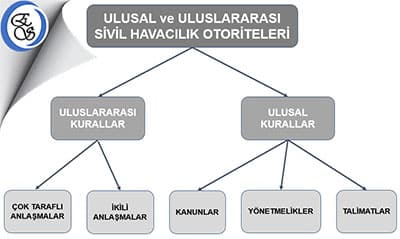
The Importance of Aviation Rules
Aviation is one of the most common ways to travel quickly and safely around the world.
However, this safety does not happen by luck.
It is supported by rules, procedures, inspections, certifications, training standards, and continuous oversight.
Airlines, airports, pilots, maintenance organizations, air traffic services, manufacturers, and many other professionals must follow these requirements.
These rules help ensure that aircraft are operated, maintained, and inspected according to approved standards.
They also support the sustainability of the industry by addressing environmental impact, operational efficiency, and the responsible use of technology.
In short, aviation rules protect passengers, crews, aircraft, companies, and the public.
Without them, aviation would quickly turn into a very expensive version of “everyone does whatever they want.” And in aviation, that is not a business model. That is a disaster plan.
The History of Aviation Regulation
Modern civil aviation rules began to develop seriously in the 1920s and 1930s as air transport expanded.
During this period, many countries adopted legal rules to control the activities of air transport companies.
As aviation became more international, national rules alone were no longer enough.
Aircraft could depart from one country, fly over several others, and land in a completely different legal environment.
This created the need for common international standards.
In 1944, the Convention on International Civil Aviation, also known as the Chicago Convention, created the foundation for international civil aviation cooperation.
The International Civil Aviation Organization (ICAO) was established to support global standardization in civil aviation.
Today, ICAO Standards and Recommended Practices (SARPs) form one of the most important foundations of international civil aviation governance.
The Content of Civil Aviation Rules
The regulatory framework covers many different parts of the aviation industry.
It includes requirements related to flight safety, aviation security, airline operations, aircraft maintenance, airworthiness, airport operations, environmental protection, aviation training, licensing, certification, and operational oversight.
These areas may look separate, but they are strongly connected.
For example, pilot training affects flight safety. Maintenance procedures affect airworthiness. Airport operations affect ground safety.
Environmental rules also affect airline planning, airport operations, and aircraft technology.
Because of this, the system must be structured, traceable, and continuously updated.
- Flight Safety
Flight safety is one of the most important subjects in the aviation industry.
Regulatory requirements define rules and guidelines to maintain safe flight operations.
These rules include procedures that pilots, maintenance personnel, dispatchers, air traffic controllers, and other aviation professionals must follow before, during, and after flight.
They may cover aircraft maintenance, flight routes, weather conditions, fuel planning, air traffic control, operational limitations, and emergency procedures.
The purpose is simple: reduce risk before it turns into an incident or accident.
- Management of Aviation Organizations
The regulatory system also defines rules for the management of aviation organizations.
These rules help ensure that airlines, airports, maintenance companies, and service providers operate legally, ethically, and safely.
For example, airlines must comply with specific safety and security standards before operating flights.
Maintenance organizations must follow approved procedures, use qualified personnel, and keep accurate technical records.
Authorities may inspect financial records, operational practices, safety management systems, training programs, and compliance documentation.
This oversight helps make sure aviation organizations do not treat safety as an optional decoration on a PowerPoint slide.
- Sustainability of the Aviation Industry
The aviation industry is also connected to sustainability concerns because of fuel consumption, emissions, noise, and infrastructure impact.
Modern requirements include measures to support a more sustainable industry.
These measures may include improving aircraft fuel efficiency, optimizing flight routes, reducing noise pollution, lowering carbon emissions, and supporting more efficient air traffic management.
The industry also works on innovative technologies to reduce environmental impact.
These technologies include more efficient engines, sustainable aviation fuels, improved aircraft design, digital operations, and better traffic flow management.
- Environmental Issues in Aviation
Aviation is often criticized for its environmental impact, especially because of fuel use and carbon emissions.
Regulatory measures address these concerns through operational and technical solutions.
These measures may include using more fuel-efficient aircraft, optimizing routes, reducing unnecessary delays, improving airport operations, and managing aircraft noise around airports.
They also encourage research and innovation to reduce the environmental footprint of aviation.
Environmental performance is now one of the key subjects in modern aviation policy.
- Aviation Training
Aviation training is another major area covered by the regulatory system.
Pilots, aircraft maintenance technicians, cabin crew, air traffic controllers, ground handling personnel, and other aviation professionals must meet defined training standards.
These standards may include theoretical training, practical training, examinations, recurrent training, licensing, and competence checks.
Training organizations must also comply with requirements related to instructors, training material, facilities, records, and training programs.
This is why aviation training is not only about learning information.
It is about proving competence under a controlled and approved system.
Conclusion on Aviation Regulations
Aviation Regulations play a critical role in maintaining flight safety and operational reliability across the aviation industry.
They define standards and protocols for aviation training, flight safety, aviation security, aircraft maintenance, airworthiness, and many other fields.
These rules are continuously updated as aviation technology, operational methods, aircraft systems, and safety expectations change.
The aviation industry affects billions of people around the world.
For this reason, flight safety is not only a technical issue. It is also a public responsibility.
The regulatory framework helps manage this responsibility by setting standards and ensuring that aviation organizations follow them.
However, compliance can also create additional costs and workload for airlines and other organizations.
These costs may include audits, training, documentation, equipment, certification, and inspection processes.
Still, from a flight safety and airworthiness perspective, these costs are necessary and acceptable.
All stakeholders in the aviation industry must work together by following the rules and maintaining a strong safety culture.
Rules Affecting a Civil Aviation Organization in Europe
The rules affecting a civil aviation organization in Europe can be listed from general to specific as follows:
- Ethical rules (Law of Ethics)
- International law
- ICAO Annexes and Standards and Recommended Practices (SARPs)
- European law
- EASA Implementing Rules (IR) and FARs
- National law
- National aviation requirements
- Company policies and procedures
This hierarchy shows that aviation organizations do not work under a single rulebook.
They operate within a layered compliance structure.
International standards, regional rules, national laws, and company procedures must work together.
If one layer is ignored, the whole system becomes weaker.
Consequences of Violating Aviation Rules
Violating aviation rules can create serious consequences.
These consequences may affect human life, aircraft airworthiness, company reputation, operational continuity, and financial stability.
- Loss of life
- Loss of flight safety and airworthiness – aircraft accidents
- Aircraft and components becoming unserviceable
- Disruption of aircraft operations
- Penalties imposed by the civil aviation authority
- Additional costs to restore parts to an airworthy condition
- Decrease in the value of aircraft or components
- Loss of trust from the civil aviation authority
- Termination of the company’s commercial existence
These consequences show why aviation rules must be followed seriously.
In aviation, a small violation can create a large chain reaction.
That is why compliance is not paperwork for the sake of paperwork.
It is one of the main barriers between normal operations and unacceptable risk.
7 Aviation Authorities and Regulatory Organizations
There are several important aviation authorities and regulatory organizations around the world.
These organizations help define, manage, support, or harmonize safety standards, operational procedures, technical rules, and industry practices.
Some of them are official regulatory authorities.
Some are international organizations that support coordination, standardization, or industry policy.
Together, they help the industry operate within a safer and more consistent global framework.
[highlight color=”yellow”]Note: The details of the organizations listed below will be explained in separate articles in the future.[/highlight]
ICAO is one of the most important organizations in international civil aviation.
As a specialized agency of the United Nations, ICAO supports the development of international standards and recommended practices.
These standards help states manage civil aviation in a consistent and coordinated way.
ICAO does not operate airlines or airports.
Instead, it creates a global framework that states use when developing and applying their own national rules.
ICAO Annexes and SARPs are especially important for safety, security, air navigation, aircraft operations, personnel licensing, airworthiness, and environmental protection.

EASA is the aviation safety agency of the European Union.
It plays a central role in safety, certification, rulemaking, standardization, and environmental protection in European air transport.
EASA helps harmonize technical and operational requirements across European Union member states.
Its work supports aircraft certification, maintenance organization approvals, continuing airworthiness, flight operations, pilot licensing, and safety oversight.
For organizations operating in Europe, EASA rules are highly important because they create a common structure across many countries.
This harmonization helps reduce fragmentation and supports safer cross-border operations.
The Federal Aviation Administration (FAA) is the aviation authority of the United States.
It is responsible for regulating civil aviation in the country.
The FAA works on flight safety, air traffic control, aircraft certification, airport safety, pilot licensing, operational rules, and airworthiness standards.
Because the United States has one of the largest aviation systems in the world, FAA rules have a strong influence on global practices.
Many manufacturers, operators, and maintenance organizations follow FAA-related standards when working with U.S.-registered aircraft, FAA approvals, or U.S.-based operations.

IATA is a worldwide trade association for airlines.
It is not a civil aviation authority in the same sense as EASA or FAA.
However, it has an important role in airline operations, industry coordination, operational standards, commercial processes, safety programs, and global air transport practices.
IATA supports airlines through standards, guidance, training, data, operational programs, and industry representation.
It also contributes to safety and efficiency through programs and standards used by airlines around the world.
For this reason, IATA is often mentioned together with regulatory organizations, even though its role is more industry-focused than government-based.

The European Civil Aviation Conference (ECAC) is an intergovernmental organization that supports cooperation in European civil aviation.
ECAC provides a platform for European states to discuss policies, standards, security, facilitation, environmental matters, and operational cooperation.
Its role is especially important for coordination between European countries.
ECAC helps support common approaches in civil aviation while working alongside other international and regional organizations.
Although ECAC does not function like a national regulator, it contributes to policy development and coordination in Europe.

Airlines for America (A4A), formerly associated with the Air Transport Association name, represents major U.S. airlines.
A4A advocates on behalf of its members and supports policies related to a safe, secure, efficient, and economically healthy U.S. airline industry.
Like IATA, A4A is not a government authority.
However, it is an influential industry organization.
It works on issues such as airline policy, operational efficiency, infrastructure, security, environmental responsibility, and industry performance.
Its role is mainly connected to advocacy, policy support, and industry representation.
-
EUROCONTROL

EUROCONTROL
EUROCONTROL is a pan-European civil-military organization that supports European aviation.
It plays an important role in air traffic management, network operations, performance improvement, safety, coordination, and aviation efficiency in Europe.
EUROCONTROL was established to support international cooperation in European air traffic management.
Its activities help improve coordination, reduce delays, support safer airspace operations, and increase the efficiency of European air transport.
Because air traffic does not stop at national borders, organizations like EUROCONTROL are essential for regional coordination.
Its work supports the safe and efficient movement of aircraft across European airspace.
National Civil Aviation Authorities and the Regulatory Layer

In addition to the 7 organizations listed above, each country has its own civil aviation authority.
These authorities are often called Civil Aviation Authorities (CAA) or National Aviation Authorities (NAA).
However, the official name may change from country to country.
For example, the civil aviation authority of Turkey is the Directorate General of Civil Aviation, known as SHGM.
CAAs and NAAs are connected to their national governments.
They may not always create aviation laws directly, but they apply and enforce laws, rules, and requirements within their country.
As national regulators, they work within the global framework created by ICAO and within regional frameworks where applicable.
A civil aviation authority is responsible for many areas.
These areas may include pilot licensing, personnel licensing, aircraft operations, airport operations, drone rules, occurrence reporting, air travel rules, continuing airworthiness, maintenance approvals, and certification oversight.
This national layer is extremely important because international standards must be implemented locally.
In other words, ICAO may define the global framework, but national authorities make sure those standards are applied inside their own aviation system.
General Duties of Aviation Regulatory Bodies
The organizations mentioned above work to define, support, coordinate, and manage safety standards, operational rules, and technical procedures.
In addition to these international and regional organizations, local regulators also operate in many countries.
These local bodies ensure that aviation activities in their countries comply with national laws and requirements.
Their duties may include setting technical standards for aircraft, managing pilot and cabin crew training requirements, overseeing aircraft maintenance, supporting air traffic management, approving airport operations, and applying licensing and certification processes.
They may also support the implementation of international conventions related to air transport.
These organizations conduct many activities to improve safety and efficiency in the industry.
These activities include creating standards, performing audits, managing certification and licensing processes, sharing information, following technological developments, and encouraging innovation.
Regulatory bodies also work on the future direction of aviation.
They support studies on more environmentally friendly aircraft, new technologies, digital air traffic management systems, unmanned aircraft systems, and safer operational models.
Final Assessment
There are many organizations around the world that influence how civil aviation is governed.
Some of them are official authorities, while others support coordination, standardization, policy, or industry representation.
Together, they help manage safety, efficiency, environmental responsibility, and operational consistency.
Aviation Regulations are essential because aviation is an international, high-risk, and highly technical industry.
Aircraft cross borders, crews work under strict standards, maintenance must be performed correctly, and passengers expect safe travel every time.
This level of safety can only be achieved through strong rules, competent authorities, disciplined organizations, and continuous oversight.
As a result, aviation authorities and regulatory organizations are not just administrative structures.
They are the backbone of safe, reliable, and sustainable civil aviation.
Best regards.