

ICAO History: 6 Duties and Responsibilities
ICAO is the abbreviation of the International Civil Aviation Organization.
It is one of the most important international organizations in civil aviation and was briefly mentioned in my previous article about aviation regulatory organizations.
In this article, we will look at the history of the organization, its main duties, and its areas of responsibility in international civil aviation.
Although the name may sound like just another institutional abbreviation, its role is much bigger than that.
The organization helps countries work together under common aviation standards, supports safe international air transport, and contributes to the orderly development of global civil aviation.
Let’s begin.
What Is ICAO?
The International Civil Aviation Organization was established through the Convention on International Civil Aviation, also known as the Chicago Convention.
This convention was signed on 7 December 1944 by 52 states and later entered into force on 4 April 1947.
Today, the organization works with 193 contracting states to support cooperation, safety, security, efficiency, capacity, and environmental responsibility in civil aviation.
Its headquarters are located in Montréal, Canada.
The main purpose of this United Nations specialized agency is not to operate airlines, airports, or aircraft.
Instead, it develops the global framework that countries use when creating and applying aviation rules.
In other words, it does not fly the aircraft, but it strongly influences the rules that make international flight possible.
That is already a pretty serious job. No cockpit, no boarding pass, but massive responsibility.
History of the Organization and the Chicago Convention
The need for a common aviation framework became clear as civil aviation grew in the first half of the twentieth century.
Aircraft were no longer only national tools.
They were becoming international means of transport that could cross borders, connect economies, and carry passengers between continents.
This created a serious question: how could countries manage international air transport safely and consistently?
The answer came with the Chicago Conference in 1944.
At the end of the conference, the Convention on International Civil Aviation was signed on 7 December 1944.
This agreement became the foundation of modern international civil aviation cooperation.
The convention defined principles related to air navigation, aircraft nationality, international standards, safety, and the responsibilities of contracting states.
It also created the institutional basis for the organization that would later guide many parts of global aviation governance.
Since then, civil aviation has changed dramatically.
Jet aircraft, satellite navigation, modern airports, global airline networks, drones, cybersecurity risks, artificial intelligence, sustainability targets, and digital air traffic management have all changed the industry.
Despite these changes, the basic need remains the same.
Countries still need common rules, shared standards, and coordinated oversight.
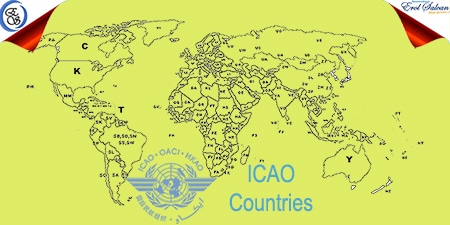
The organization is currently supported and governed by 193 contracting states.
These states work together to support diplomacy, coordination, and technical cooperation in air transport.
You can access the official member state list through the source below:
6 Main Duties and Responsibilities of ICAO
The duties and responsibilities of the organization can be grouped under six main areas.
These areas show how it supports international aviation from standard-setting to safety oversight, technology, capacity, environmental policy, and information sharing.
-
1. Providing Information on International Aviation Services and Standards
The organization provides information about international aviation services and helps states apply common standards in a harmonized way.
This is important because aircraft often operate across many different countries during a single journey.
If each country applied completely unrelated procedures, international aviation would become slower, riskier, and more complicated.
Common guidance helps states, aviation authorities, operators, and service providers understand the expected level of technical and operational practice.
This area includes aviation documentation, guidance material, technical publications, and international coordination.
-
2. Leading Civil Aviation Safety and Security Efforts
One of the most important responsibilities of the organization is supporting global civil aviation safety.
It develops standards and recommended practices that help states manage aviation safety, airworthiness, personnel licensing, aircraft operations, and air navigation.
It also supports aviation security through global programmes and guidance.
Security is different from safety.
Safety focuses on reducing operational and technical risks, while security focuses on protecting aviation from unlawful interference.
Both areas are essential for a reliable aviation system.
Through programmes such as the Universal Safety Oversight Audit Programme (USOAP) and the Universal Security Audit Programme Continuous Monitoring Approach (USAP-CMA), the organization monitors how states perform in safety and security oversight.
-
3. Encouraging Aviation Technology and Innovation
The aviation industry is constantly changing because of new technology.
Modern aircraft systems, satellite-based navigation, unmanned aircraft, artificial intelligence, digital data systems, cybersecurity, and advanced communication technologies all affect how aviation is managed.
The organization supports the safe and coordinated integration of new technologies into the aviation system.
This does not mean every new idea is immediately accepted.
In aviation, innovation must be tested, standardized, regulated, and safely implemented.
A technology may look impressive on paper, but if it cannot be integrated safely into international operations, it creates more problems than solutions.
This is why technical coordination is essential.
-
4. Supporting Capacity and Efficiency in Aviation
Another important responsibility is supporting aviation capacity and operational efficiency.
This includes air traffic management, airport planning, air navigation services, route development, and cooperation between states.
As global air traffic grows, capacity becomes a serious issue.
Airports, airspace, air traffic control systems, and infrastructure must be planned carefully.
Otherwise, delays, congestion, inefficiency, and safety risks can increase.
The organization supports cooperation in these areas so that states can improve the performance of their aviation systems.
This helps international air transport become safer, more predictable, and more efficient.
-
5. Supporting Environmental Sustainability in Aviation
Environmental sustainability is now one of the major subjects in global aviation.
Aircraft emissions, fuel efficiency, noise, airport development, and long-term climate goals are all part of this discussion.
The organization develops policies, guidance, and standards to reduce the environmental impact of aviation.
This includes work related to aircraft noise, local air quality, greenhouse gas emissions, sustainable aviation fuels, and global environmental measures.
The goal is not to stop aviation, because aviation connects people, economies, and cultures.
The goal is to make aviation cleaner, more efficient, and more sustainable.
-
6. Informing Member States and Sharing Aviation Data
The organization also collects, analyzes, and shares aviation-related data with member states.
This information helps countries understand global aviation trends, safety performance, security priorities, traffic development, environmental challenges, and operational risks.
Data is especially important because aviation decisions should not be based on guesswork.
Reliable data helps states plan better policies, identify risks, and improve oversight systems.
Information sharing also supports cooperation between countries.
In a global industry, one country’s aviation system can affect many others.
That is why communication and transparency are critical.
Other Activities of the Organization
In addition to its main duties, the organization carries out many activities to support safety, efficiency, capacity, and environmental sustainability in aviation.
These activities are connected with international standards, risk management, air traffic management, aviation law, and technical cooperation.
-
Setting International Aviation Standards
The organization plays an important role in setting international aviation standards so that states can work together in a coordinated way.
These standards may relate to aircraft operations, personnel licensing, airworthiness, air traffic services, airports, security, facilitation, environmental protection, and aviation training.
The purpose is to create a common technical language for civil aviation.
-
Safety Oversight and Risk Management
Safety oversight and risk management are among the most important parts of modern aviation governance.
The organization provides guidance, training material, audit programmes, technical working groups, and other resources to support states in these areas.
USOAP focuses on a state’s ability to provide effective safety oversight.
This includes assessing whether the state has implemented the critical elements of a safety oversight system effectively and consistently.
-
Air Navigation and Air Traffic Management
Air navigation is a major part of international aviation.
It includes flight planning, safe navigation, air traffic control, communication, surveillance, and air traffic management.
Because aircraft move across borders, these systems must work together.
The organization supports cooperation between countries so that international air traffic can be managed safely and efficiently.
-
Environmental Work
The organization supports environmental sustainability by developing policies and standards that reduce the environmental effects of aviation.
This includes work on aircraft noise, emissions, fuel efficiency, and long-term climate-related measures.
Environmental protection is no longer a side topic in aviation.
It is one of the central subjects shaping the future of air transport.
-
International Aviation Law
International aviation law provides the legal framework for civil aviation.
The organization informs member states about legal subjects and contributes to the development of international aviation agreements and conventions.
This legal framework is important because aviation cannot operate safely or fairly without clear rules.
Audit Programmes: USOAP and USAP
It is important to understand what these audit programmes cover.
They do not directly audit airlines, airports, or individual industry operators in the same way that a national authority might inspect them.
Instead, they focus on the systems created by state governments.
This includes legislation, regulations, resources, procedures, and oversight capabilities established by each state to apply Standards and Recommended Practices effectively.
USOAP results can be reviewed publicly through the organization’s interactive safety audit tools.
USAP results are confidential and are not publicly disclosed.
However, they may be shared with other member states through appropriate confidential mechanisms.
Standards and Recommended Practices
The Chicago Convention is supported by 19 Annexes that contain Standards and Recommended Practices, commonly known as SARPs.
These documents are among the most important building blocks of international civil aviation.
They help states apply common requirements in key aviation areas.
-
Standard
A Standard is a specification for physical characteristics, configuration, material, performance, personnel, or procedure.
Its uniform application is considered necessary for the safety or regularity of international air navigation.
Contracting states are expected to comply with Standards in accordance with the Chicago Convention.
-
Recommended Practice
A Recommended Practice is also a specification for physical characteristics, configuration, material, performance, personnel, or procedure.
Its uniform application is considered desirable for the safety, regularity, or efficiency of international air navigation.
Contracting states are expected to make efforts to comply with Recommended Practices.
ICAO Annexes
Standards and Recommended Practices are included in 19 Annexes, each covering a specific subject area.
These subject areas include personnel licensing, rules of the air, meteorological service, aeronautical charts, units of measurement, aircraft operations, aircraft nationality and registration marks, airworthiness, facilitation, telecommunications, air traffic services, search and rescue, accident investigation, aerodromes, aeronautical information services, environmental protection, security, dangerous goods, and safety management.
The Annexes are regularly amended as aviation technology and operational needs change.
Many details related to these subjects are also published in the numbered document series.
ICAO Doc Series
The numbered document series includes many technical publications, manuals, procedures, and guidance documents.
These documents support the implementation of the Standards and Recommended Practices found in the Annexes.
To review the official publication series, you can use the source below:
Conclusion
ICAO has an important role in increasing cooperation between countries, improving civil aviation safety, supporting efficiency, expanding capacity, and protecting environmental sustainability.
To achieve these goals, it works with the participation and cooperation of contracting states.
The organization also follows technological developments that affect the aviation industry.
In recent years, technologies such as unmanned aircraft, artificial intelligence, digital systems, and advanced air traffic management tools have created new challenges.
These technologies must be integrated into aviation in a way that is compatible with international standards and safety expectations.
This is where global coordination becomes essential.
The organization is one of the most important international institutions in civil aviation.
It develops standards, informs member states, supports oversight systems, follows technological developments, and contributes to safer and more sustainable air transport.
In short, international aviation needs common rules, and common rules need strong coordination.
ICAO provides one of the main foundations for that coordination.
Best regards.