Aircraft Maintenance: 10 Planning Components
Aircraft Maintenance
Aircraft Maintenance includes all routine maintenance, repair, inspection, improvement, and airworthiness-related activities required to keep aircraft operating safely and effectively.
These activities must be performed according to aviation safety standards and by authorized maintenance personnel.
In simpler terms, maintenance covers all actions needed to keep an aircraft airworthy from the moment it enters service until it is retired from operation.
This is not just a technical process.
It is also a safety, planning, documentation, compliance, and operational discipline process.
In aviation, maintenance is not something that can be handled with a “looks fine to me” attitude.
That approach may work when checking a wobbly chair, not when managing an aircraft that carries people thousands of meters above the ground.
For this reason, every maintenance task must be traceable, approved, planned, and performed according to defined procedures.
You can also read more aviation-related articles in the aviation section of my website.
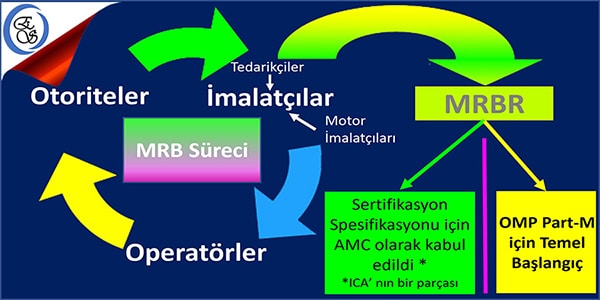
Aircraft Maintenance Planning and Technical Documents
Aircraft maintenance planning is the process of determining which maintenance tasks must be performed, when they must be performed, and under which technical conditions they must be completed.
This process is shaped by manufacturer documents, regulatory requirements, operational experience, reliability data, and safety-related findings.
A maintenance plan is not created randomly.
It is built through technical analysis, regulatory approval, operational feedback, and continuous improvement.
Aircraft are complex systems made of thousands of parts, components, software-supported systems, structures, and operational interfaces.
Because of this complexity, maintenance planning must be systematic.
Otherwise, organizations may miss critical tasks, repeat unnecessary work, increase costs, or create safety risks.
A strong planning process helps operators keep aircraft available, reliable, safe, and compliant with airworthiness requirements.
It also supports better resource management.
Maintenance teams need qualified personnel, approved tools, spare parts, hangar capacity, technical data, and enough time to complete tasks properly.
If these resources are not planned correctly, even a simple task can create operational delays.
And in aviation, a small delay has a unique talent for becoming everyone’s problem very quickly.
1. Maintenance Review Board
The Maintenance Review Board, also known as MRB, is a committee established to create and update aircraft maintenance programs in the aviation industry.
MRB is used to determine the maintenance activities and intervals required throughout the service life of an aircraft system.
This process compares the maintenance requirements defined by aircraft manufacturers with real operational experience and field data.
The purpose is to create a maintenance structure that is both safe and practical.
In other words, MRB helps avoid two dangerous extremes.
The first is insufficient maintenance, which can directly threaten safety.
The second is excessive maintenance, which can waste time, money, and manpower without adding real safety value.
A good maintenance program should be balanced, evidence-based, and operationally realistic.
2. MSG-3 Maintenance Method
MSG-3, or Maintenance Steering Guide 3, is a method used to develop maintenance programs required for safe and efficient aircraft operation.
It is a risk-analysis-based approach used to determine the maintenance activities needed during the life cycle of an aircraft system.
The MSG-3 logic belongs to Airlines for America, formerly known as ATA.
This method focuses on function, failure consequences, inspection needs, and preventive maintenance logic.
It helps organizations ask a very important question: what task actually prevents or detects a meaningful failure?
That question matters because aviation maintenance should not be built on habit alone.
It should be built on technical reasoning and safety impact.
MSG-3 supports a more structured way of deciding whether a component requires scheduled inspection, functional checks, restoration, discard limits, or other preventive actions.
3. Maintenance Planning Data
Maintenance Planning Data, also known as MPD, supports the creation and planning of an aircraft maintenance program.
It ensures that maintenance activities are performed according to the requirements and intervals defined by the aircraft manufacturer.
This document may also include technical information such as component definitions, maintenance instructions, performance limits, fault detection methods, and repair procedures.
MPD is one of the key references used by operators when building their approved maintenance program.
It helps translate manufacturer-level technical requirements into practical planning actions.
Without this type of document, maintenance planning would become much harder to standardize.
Every operator might interpret requirements differently, which would create confusion and compliance risks.
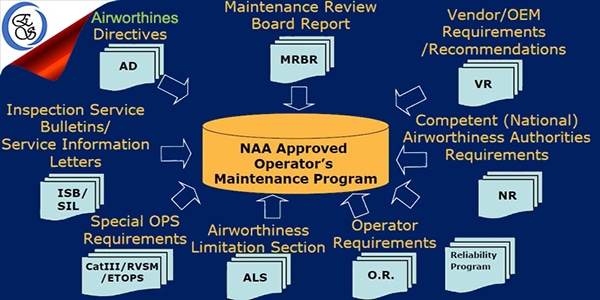
Approved Maintenance Program and Regulatory Requirements
An approved maintenance program defines the standards required for airline operators to keep their aircraft safe and airworthy.
Airline operators prepare aircraft maintenance programs to meet the requirements defined by the competent aviation authority.
These programs determine maintenance intervals, task procedures, replacement frequencies, inspections, and other continuing airworthiness requirements.
For an operator, the maintenance program is not just a file prepared for approval.
It is a living document that affects daily operations, maintenance planning, spare part management, manpower planning, and aircraft availability.
When this program is weak, the whole operation becomes weaker.
When it is strong, the organization can manage safety and efficiency much more effectively.
4. National Airworthiness Authority Requirements
Competent or National Airworthiness Authority requirements are defined by a country’s aviation regulatory authority.
These requirements cover subjects such as aircraft design, manufacturing, maintenance, operation, and approval.
They are critical for flight safety, air transport, and other aviation activities.
For Turkey, the competent authority is SHGM.
Operators must follow the requirements of their national authority when preparing and applying their maintenance programs.
This creates a legal and technical framework for continuing airworthiness.
Even if a manufacturer recommends a maintenance action, the operator must still consider authority requirements and approved procedures.
In aviation, “the manufacturer said so” and “the authority approved it” are not always the same sentence.
That difference matters more than people outside the sector may think.
5. Maintenance Review Board Report
The Maintenance Review Board Report, also known as MRBR, is a technical report created by the MRB as part of the aircraft maintenance program process.
This report includes changes and recommendations proposed by the MRB for updating and improving the maintenance and repair program of aircraft components.
Authorities, manufacturers, and operators may all take part in the MRB process.
The output of this process is the MRBR.
MRBR is important because it provides a structured basis for the maintenance tasks later reflected in operator programs.
It connects technical analysis with approved maintenance logic.
Operators can use this report as a foundation when developing their own approved program.
However, operational conditions, aircraft configuration, authority requirements, and reliability findings may still require additional evaluation.
6. Airworthiness Directive
An airworthiness directive, often shortened as AD, is an instruction issued by aviation authorities or aircraft-related authorities to ensure that aircraft can continue to fly safely.
These directives may relate to a problem detected in a specific component, system, structure, software function, or operating condition.
Aircraft maintenance teams must apply the required corrective actions within the defined limits.
An AD is not a friendly suggestion.
It is mandatory, and ignoring it is the kind of decision that makes regulators appear at the door with absolutely no sense of humor.
ADs may require inspection, modification, replacement, operational limitation, or other corrective actions.
They are one of the most important tools for maintaining continuing airworthiness after an aircraft enters service.
Because aircraft operate for many years, new findings may appear long after certification.
Airworthiness directives help manage these findings in a controlled and enforceable way.
7. Inspection Service Bulletin
An Inspection Service Bulletin, or ISB, is a notification published by a manufacturer when a possible safety-related condition is detected in an aircraft or aircraft component.
It may include a flight safety procedure that maintenance personnel should apply.
In some cases, it may also recommend an inspection or corrective action.
Service bulletins are important because manufacturers collect technical feedback from operators and field experience.
This information can reveal patterns that may not be obvious to a single operator.
An operator should evaluate such documents carefully and decide how they affect its fleet.
Depending on authority rules and the nature of the issue, a bulletin may later become connected to mandatory action.
That is why technical publications should not be treated as background noise.
In maintenance departments, unread documents have a magical ability to become urgent problems later.
8. Service Information Letter
A Service Information Letter, or SIL, is an information document published by a manufacturer about maintenance or operational issues related to an aircraft or component.
SIL documents may be advisory in nature.
They may also include maintenance instructions, operational notes, or information about a specific technical issue.
Although a SIL may not always be mandatory, it can still be valuable for operators.
It may help maintenance teams understand component behavior, operational limitations, troubleshooting approaches, or recommended practices.
Good maintenance planning is not only about mandatory documents.
It is also about understanding the technical environment around the aircraft.
Documents such as SILs help organizations build that awareness.
Operational Requirements and Reliability Control
Maintenance planning is also shaped by special operations, airworthiness limitations, operator needs, reliability findings, and manufacturer recommendations.
These elements help the operator adapt the aircraft maintenance program to real operational conditions.
A fleet operating in harsh environments may need different attention than a fleet operating under easier conditions.
Aircraft age, utilization rate, route structure, climate, airport conditions, and operational type can all affect maintenance planning.
This is why maintenance is never only a checklist.
It is a system of decisions supported by data, experience, regulation, and technical documentation.
9. Special Operations Requirements
Special Operations Requirements refer to specific requirements defined for aviation operations designed for special operating conditions.
These requirements are determined by aviation regulatory bodies.
Examples may include ETOPS, LVO, RVSM, and similar specific operations.
Such operations may require additional maintenance controls, equipment checks, documentation, training, and operational monitoring.
For example, an aircraft used for extended-range operations must meet specific reliability and maintenance expectations.
This is because the aircraft may operate far from suitable diversion airports.
In that kind of operation, maintenance planning becomes even more critical.
Special operations remind us that not every flight is technically the same.
Some operations require a higher level of preparation because the margin for error becomes narrower.
10. Reliability Program and OEM Requirements
A reliability program is a management system used in aviation to improve the reliability of aircraft and their components.
This program helps flight crews, maintenance personnel, and other aviation employees identify and prevent aircraft-related failures.
As a result, aircraft maintenance and operation can become more efficient while flight safety improves.
A reliability program may include flight data analysis, failure reports, technical records, defect trends, component removal data, and other operational information.
By analyzing these data sources, operators can improve aircraft reliability and reduce operating costs.
The program also supports the development of maintenance programs and helps airlines plan their aircraft more efficiently.
Vendor or OEM requirements and recommendations are also important in this process.
OEM requirements are defined by the original equipment manufacturers that design, produce, maintain, or support aviation equipment.
These requirements include the technical and operational information needed to use the product correctly and safely.
For example, an aircraft engine manufacturer may define maintenance intervals, replacement limits, inspection methods, and other recommendations for safe engine operation.
Operators should evaluate these recommendations together with authority rules, reliability data, and their own operational experience.
This combined approach helps create a more realistic and effective maintenance structure.
Aircraft Maintenance: Conclusion
Aircraft Maintenance is one of the most important foundations of safe aviation operations.
It includes much more than repairing something after it fails.
It requires planning, documentation, inspection, compliance, technical analysis, reliability monitoring, and continuous coordination between operators, manufacturers, authorities, and maintenance organizations.
The ten components explained above show how wide the maintenance planning process really is.
MRB, MSG-3, MPD, authority requirements, MRBR, ADs, service bulletins, special operation requirements, reliability analysis, and OEM documents all support the same goal.
That goal is to keep aircraft airworthy, safe, reliable, and operationally efficient.
In aviation, maintenance is not only a technical responsibility.
It is also a safety culture responsibility.
Every document, inspection, task card, report, and corrective action contributes to the larger system.
When this system works properly, passengers usually do not notice it.
And honestly, that is the best possible result.
Because in aviation, the best maintenance story is often the one nobody has to talk about during the flight.
Respectfully,