

Aircraft Parts: 6 Main Sections of an Airplane
Aircraft parts
Aircraft parts are the main sections and systems that work together so an airplane can fly safely, efficiently, and in a controlled way.
Each section has a specific role.
Some parts generate lift, some provide thrust, some support landing and takeoff, and others help pilots control the aircraft during flight.
Airplanes are considered one of the fastest and safest ways to travel around the world.
This safety is not the result of a single component.
It comes from the coordinated operation of many structural, mechanical, aerodynamic, hydraulic, electrical, and control systems.
The main sections of an aircraft affect its aerodynamic characteristics, lift, speed, thrust, balance, stability, and landing performance.
These sections also influence fuel efficiency, passenger comfort, aircraft range, maintenance needs, and operational safety.
In simple terms, an aircraft is not just a tube with wings and engines.
It is a carefully designed system where every part has a job.
And in aviation, “approximately correct” is not a lifestyle. It is usually the beginning of a maintenance report.
Aircraft main sections are required for an airplane to stay in the air and operate safely.
These sections include the fuselage, wings, engines, tail, landing gear, and cockpit.
Each of them has a vital role in aircraft safety and performance.
In this article, we will examine the 6 main sections of an airplane and briefly look at other important systems.
1. Fuselage
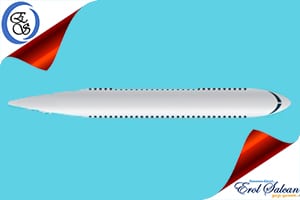
The fuselage is the main body of the airplane.
It carries the passenger cabin, cockpit, cargo areas, fuel-related structures, hydraulic components, electrical wiring, avionics equipment, and many other systems.
It also provides the central structural connection between the wings, tail, landing gear, and other major assemblies.
The fuselage has a major effect on the aerodynamic characteristics of the aircraft.
Its shape can reduce drag and help the aircraft reach higher speeds more efficiently.
A well-designed fuselage supports both structural strength and aerodynamic performance.
The structural strength of the fuselage is critical for safety.
During flight, the fuselage is exposed to pressure differences, aerodynamic loads, landing loads, vibration, and operational stresses.
For pressurized aircraft, it also has to withstand cabin pressure loads during each flight cycle.
The material, size, and shape of the fuselage are selected according to aircraft type, mission, capacity, speed, and operational requirements.
The location of the passenger cabin also affects aircraft design.
Passenger seating, cargo distribution, fuel load, and equipment placement can influence the center of gravity.
If the balance is not managed correctly, aircraft performance and stability may be affected.
Aircraft fuselage structures are generally found in three basic types:
- Truss structure
- Monocoque structure
- Semi-monocoque structure
A truss structure uses a framework of members to carry loads.
A monocoque structure carries loads mainly through the outer skin.
A semi-monocoque structure combines the outer skin with frames, stringers, and other supporting elements.
Modern transport aircraft commonly use semi-monocoque construction because it offers a good balance between strength, weight, and maintainability.
The fuselage structure plays a major role in aircraft design and performance.
Manufacturers optimize fuselage design according to the purpose and requirements of each aircraft.
This helps make airplanes safer, faster, more comfortable, and more efficient.
2. Wings
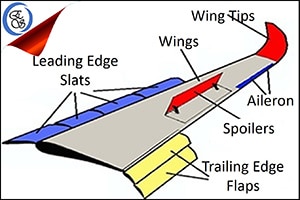
The wings are among the most important sections of an airplane.
Their main purpose is to generate lift.
Lift is the aerodynamic force that allows the aircraft to stay in the air.
Wing shape, airfoil design, angle of attack, wing area, and airflow all affect how much lift is produced.
The curved shape of the airfoil and the pressure difference around the wing help create upward force.
Wings also affect drag, speed, stability, fuel efficiency, and maneuverability.
This is why wing design is one of the most important parts of aircraft engineering.
A passenger aircraft, a fighter aircraft, a cargo aircraft, and a glider may all have very different wing designs.
That is because their missions are different.
Some aircraft need high speed.
Some need long range.
Some need short takeoff and landing performance.
Others need high maneuverability or heavy lift capability.
Wing types play an important role in aircraft design.
They directly affect aerodynamic properties, speed, payload capacity, fuel consumption, and flight characteristics.
Aircraft wings are generally discussed under several common design types, including:
- Straight wing
- Delta wing
- Wing with winglets
A straight wing is often used on slower aircraft because it can provide good lift at lower speeds.
A delta wing is usually associated with high-speed aircraft and certain military designs.
Winglets are added to the wingtips to reduce induced drag and improve efficiency.
Modern aircraft may use many variations of these designs.
The wing may also contain fuel tanks, control surfaces, flaps, slats, spoilers, and structural spars.
So when we say “wing,” we are not talking about a simple flat surface.
We are talking about a highly engineered system that quietly does most of the hard work while passengers argue about window seats.
3. Engines
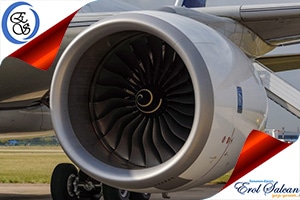
Aircraft engines provide the thrust needed for movement on the ground, takeoff, climb, cruise, and flight operations.
Without thrust, an aircraft cannot accelerate to takeoff speed or maintain controlled flight.
Engines also support many other aircraft systems.
Depending on the aircraft type, they may provide electrical power, hydraulic pressure, pneumatic air, and other operational resources.
Modern commercial airplanes mostly use turbine engines, especially turbofan engines.
Turbofan engines are preferred because they offer strong thrust, good efficiency, and reliable performance for passenger and cargo aircraft.
Aircraft engines are designed according to the mission and operating environment of the airplane.
A small training aircraft may use a piston engine.
A commercial jet usually uses turbofan engines.
A helicopter often uses a turboshaft engine.
A high-speed military aircraft may use turbojet or advanced turbine configurations.
Common aircraft engine types include:
- Piston engines
- Turbofan engines
- Turbojet engines
- Turboshaft engines
- Rocket engines
Piston engines are commonly used in small general aviation aircraft.
Turbofan engines are widely used in modern airline operations.
Turbojet engines are associated with high-speed applications but are less common in modern commercial aviation.
Turboshaft engines are commonly used in helicopters.
Rocket engines are used in spacecraft and specialized vehicles rather than normal civil aviation.
The engine is one of the most expensive and maintenance-critical parts of an airplane.
Its performance affects fuel consumption, range, noise, emissions, and operating cost.
That is why engine maintenance, inspection, monitoring, and reliability are extremely important in aviation.
4. Tail Section
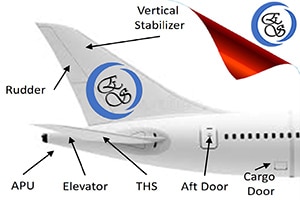
The tail section is one of the most important parts at the rear of the aircraft.
It usually includes the horizontal stabilizer and vertical stabilizer.
These stabilizing surfaces help keep the aircraft balanced and controllable during flight.
The horizontal stabilizer mainly supports pitch stability.
Pitch is the nose-up and nose-down movement of the aircraft.
The elevator is usually located on the trailing edge of the horizontal stabilizer.
It helps the pilot control pitch during takeoff, climb, cruise, descent, and landing.
The vertical stabilizer mainly supports directional stability.
It helps keep the aircraft aligned with the direction of flight.
The rudder is usually located on the trailing edge of the vertical stabilizer.
It helps control yaw, which is the side-to-side movement of the nose.
Together, the stabilizers, elevator, and rudder improve aircraft stability and maneuverability.
They are especially important during turns, crosswind operations, engine-out situations, and other flight conditions that require directional control.
The Auxiliary Power Unit (APU) is also generally located in the tail section of many aircraft.
The APU provides electrical and pneumatic power when the main engines are not running.
It can also help start the main engines and support systems while the aircraft is on the ground.
As always, exact design may vary depending on aircraft type.
Aviation loves rules, but aircraft manufacturers still enjoy making every model just different enough to keep maintenance technicians awake.
5. Landing Gear
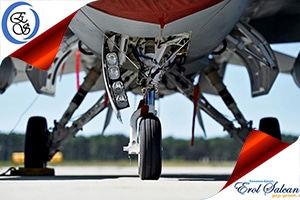
The landing gear allows the aircraft to take off, land, taxi, and remain supported on the ground.
It includes wheels, tires, shock absorbers, brakes, hydraulic systems, structural components, doors, and retraction mechanisms depending on aircraft type.
Landing gear is a critical system because it carries heavy loads during takeoff and landing.
During landing, it absorbs impact forces and helps keep the aircraft stable on the runway.
It also supports braking, steering, ground movement, and parking operations.
For large aircraft, landing gear design must handle high weight, high speed, runway loads, and repeated operating cycles.
That is not a small job.
Imagine catching an entire aircraft every time it lands and still being expected to look normal afterward.
That is basically the landing gear’s career.
Different aircraft use different landing gear types depending on their operating environment and mission.
Common types include:
- Fixed landing gear
- Retractable landing gear
- Float or water landing gear
Fixed landing gear remains extended during flight and is often used on smaller or simpler aircraft.
Retractable landing gear can be extended or retracted to reduce drag during flight.
Float landing gear or water landing systems allow aircraft to operate on water surfaces.
Some aircraft may also use skis, special rough-field gear, or other configurations depending on their purpose.
The landing gear system must be inspected and maintained carefully.
Tires, brakes, hydraulic lines, actuators, struts, and structural attachments are all important for safe operation.
A small issue in this system can quickly become a very expensive and very dramatic runway problem.
6. Cockpit
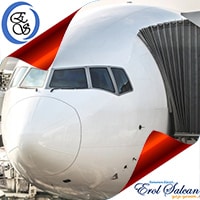
The cockpit is the control center of the aircraft.
It is designed so pilots can manage flight, monitor systems, communicate, navigate, and respond to changing flight conditions.
Inside the cockpit, pilots can see important information such as altitude, speed, heading, attitude, engine parameters, navigation data, warnings, and system status.
Modern cockpits use digital displays, flight management systems, autopilot controls, communication radios, navigation systems, and warning systems.
Older aircraft may have more analog instruments, while modern aircraft often use glass cockpit technology.
The cockpit also includes switches, buttons, control levers, panels, and flight controls used to manage aircraft systems.
These systems may include electrical power, hydraulics, fuel, pressurization, air conditioning, anti-ice systems, lighting, and engine controls.
Cockpit design depends on aircraft type, size, mission, manufacturer, and certification requirements.
A training aircraft cockpit is very different from a commercial airliner cockpit.
A fighter aircraft cockpit is different again.
Still, the main goal is always the same: give the crew the information and control needed for safe flight.
Good cockpit design reduces workload, improves situational awareness, and helps pilots make correct decisions.
This is especially important during high-workload phases such as takeoff, approach, landing, abnormal situations, and emergency procedures.
Other Aircraft Sections and Systems
In addition to the 6 main sections, airplanes include many other systems and components.
These systems support power generation, flight control, electrical distribution, hydraulic operation, and general aircraft functionality.
They may not always be visible to passengers, but they are essential for safe operation.
Auxiliary Power Unit APU
The APU, or Auxiliary Power Unit, is a system that produces electrical, pneumatic, and sometimes hydraulic power depending on aircraft design.
It is commonly used when the aircraft is on the ground and the main engines are not running.
The APU can provide power for lighting, air conditioning, avionics, and engine starting.
In many aircraft, it is installed in the tail section.
It gives the aircraft a certain level of independence from ground support equipment.
This is especially useful during airport operations, maintenance activities, and aircraft turnaround.
Primary Flight Control Surfaces
Primary flight control surfaces are movable surfaces used to control the aircraft’s attitude and direction.
They help control pitch, roll, and yaw.
These surfaces allow the pilot or flight control system to guide the aircraft safely during flight.
The main primary flight control surfaces include:
- Elevators
- Rudder
- Ailerons
Elevators control pitch movement.
The rudder controls yaw movement.
Ailerons control roll movement.
These surfaces work together to provide stable and controlled flight.
Secondary Flight Control Surfaces
Secondary flight control surfaces support the main control surfaces and improve aircraft performance during different flight phases.
They are especially important during takeoff, approach, landing, and speed management.
- Flaps
- Spoilers
- Slats
Flaps increase lift and drag, especially during takeoff and landing.
Slats help improve lift at lower speeds by modifying airflow over the wing.
Spoilers can reduce lift, increase drag, and help control descent or braking after landing.
These surfaces allow the aircraft to operate safely at different speeds and configurations.
Aircraft Electrical Systems
Aircraft electrical systems are designed to control and power electrical components.
They are critical for safe and efficient operation.
Electrical systems provide power to avionics, lighting, communication systems, navigation systems, pumps, motors, sensors, control units, and emergency equipment.
Aircraft electrical systems may include the following components:
- Electrical generators
- Batteries
- Electrical panels
- Electrical wiring
- Electrical motors
- Inverters
- Electrical power distribution systems
- Electrical emergency systems
- Electrical control and protection systems
Electrical power may come from engine-driven generators, the APU, batteries, or external ground power.
Modern aircraft rely heavily on electrical systems.
Because of this, redundancy, protection, monitoring, and proper maintenance are extremely important.
Aircraft Hydraulic Systems
Aircraft hydraulic systems are used to control many movable parts.
They operate through pressurized hydraulic fluid.
Hydraulic power is commonly used for landing gear, brakes, flight control surfaces, thrust reversers, cargo doors, and other high-force systems.
Hydraulic systems are preferred because they can transmit large amounts of force efficiently.
For this reason, they are widely used in aircraft where mechanical force requirements are high.
Common hydraulic system components include:
- Hydraulic fluids
- Hydraulic pumps
- Hydraulic cylinders
- Hydraulic valves
- Hydraulic reservoirs
- Hydraulic filters
- Hydraulic locks
- Hydraulic pressure indicators
- Hydraulic circuit breakers or protection devices
- Hydraulic application areas
Hydraulic systems must be maintained carefully because leaks, contamination, pressure loss, or component failure can affect critical aircraft functions.
This is why hydraulic inspections, fluid checks, filter replacement, pressure tests, and leak detection are important parts of aircraft maintenance.
Conclusion
Aircraft Parts work together to make safe and efficient flight possible.
The fuselage carries passengers, cargo, systems, and structural loads.
The wings generate lift and support aerodynamic performance.
The engines provide thrust and system power.
The tail section supports stability and control.
The landing gear allows ground movement, takeoff, and landing.
The cockpit gives pilots the information and controls needed to operate the aircraft safely.
Other systems such as the APU, flight control surfaces, electrical systems, and hydraulic systems also play essential roles.
Each system may look separate, but aircraft design depends on integration.
A safe airplane is not created by one strong component.
It is created by many systems working together correctly.
That is why understanding the main sections of an airplane is a good starting point for anyone interested in aviation.
Best regards.