

Educational Sites: 9 Useful Websites for Learning
Educational Sites can help students, professionals, and curious people access useful knowledge more easily.
Today, the internet offers many digital resources with courses, videos, exercises, audiobooks, coding lessons, language tools, and academic materials.
These resources allow people to study different subjects at their own pace.
Some of them are free, while others offer paid courses, certificates, premium plans, or career-focused programs.
Popular examples include Khan Academy, Coursera, Udemy, edX, TED, Codecademy, Duolingo, Librivox, and Wolfram Alpha.
Each one has a different purpose.
Some focus on school subjects, some on university-level courses, some on language practice, some on programming, and some on general knowledge.
This variety is one of the biggest advantages of digital study resources.
You no longer need to wait for the perfect classroom, perfect schedule, or perfect teacher.
Sometimes all you need is a good resource, a little discipline, and the ability not to open social media every three minutes.
That last part is usually the real final boss.
In this article, I will introduce 9 useful resources that I personally use regularly or from time to time.
They can help students, teachers, self-learners, career changers, language learners, and anyone who wants to improve their knowledge.
Why Digital Study Resources Are Useful
Digital study resources are valuable because they remove many barriers.
Traditional study may depend on location, school access, time, money, and available teachers.
Digital tools reduce some of these limitations by giving users flexible access to content.
A student can review mathematics at night.
A professional can study coding after work.
A language learner can practice vocabulary during a short break.
A curious person can watch a science talk, listen to a classic book, or solve a math problem without leaving home.
Another advantage is personal pace.
Some people understand a topic quickly, while others need more repetition.
Many digital tools allow users to pause, repeat, skip, review, and practice whenever they need.
This makes the study process more personal.
Self-improvement is no longer limited to school years.
Technology, business, science, design, languages, and software development change constantly.
Because of this, people need to keep improving themselves throughout life.
Good digital resources can support this process in a practical way.
9 Useful Resources for Students and Self-Learners
Below are 9 resources that offer different study opportunities.
Some are better for school subjects, some are better for professional development, and some are better for personal growth.
The best choice depends on your goal.
For structured academic content, Khan Academy, Coursera, and edX can be useful.
For practical skills, Udemy or Codecademy may be more suitable.
For language practice, Duolingo can help.
For ideas, speeches, and inspiration, TED is a strong option.
For listening to books, Librivox may be valuable.
For computational answers, Wolfram Alpha can save serious time.
Recommended Digital Resources:
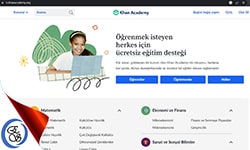
This resource offers free study materials to students around the world.
It provides interactive lessons, videos, practice questions, quizzes, and exercises in many subjects.
These subjects include mathematics, science, history, art, economics, computing, and humanities.
It is especially useful for students who want to review school subjects in a clear and structured way.
It can also help learners fill knowledge gaps.
For example, if a student struggles with algebra, fractions, physics, or basic grammar, the resource can provide step-by-step explanations.
One of its strongest features is accessibility.
Students can use it on different devices and study whenever they have time.
It also offers tools for teachers.
Teachers can create study plans, assign exercises, and monitor student progress.
This makes it useful not only for independent learners but also for classrooms.

This language practice tool gives users the opportunity to study different languages through short, interactive lessons.
It uses gamification techniques to make the process more enjoyable.
Users can practice vocabulary, grammar, listening, pronunciation, and sentence structure.
It is especially useful for beginners because it introduces new words and structures gradually.
It also rewards consistency with streaks, points, levels, and progress tracking.
This makes language practice feel more like a daily habit.
Of course, one app alone may not be enough to master a language completely.
Speaking practice, real conversations, longer texts, and writing are also important.
Still, it is a practical tool for building a foundation and keeping daily contact with a target language.
For people who say “I will start studying a language one day,” it can at least help make that day today.

This service offers courses, professional certificates, specializations, and degree-related programs in cooperation with universities and institutions around the world.
Its catalog covers science, engineering, computer science, mathematics, business, social sciences, health, arts, and data analysis.
The course structure often includes video lessons, readings, quizzes, assignments, projects, and peer-reviewed work.
It can be useful for learners who want more structured and academic content.
It is also valuable for professionals who want to improve their skills or add certificates to their career profile.
Some courses can be audited for free, while certificates and graded assignments may require payment.
This resource is especially helpful when you want content from universities, recognized institutions, or industry partners.
It gives learners access to subjects that may otherwise be difficult to reach.
-
TED:

This organization promotes the spread of ideas and knowledge around the world.
The name comes from Technology, Entertainment, and Design.
Today, its talks cover a much wider range of subjects.
These subjects include science, education, technology, psychology, art, culture, health, creativity, leadership, environment, and social issues.
The talks are usually short, focused, and designed to present an idea clearly.
Most of them are available for free.
This makes it valuable for people who want new perspectives without taking a full course.
It can be especially useful for inspiration, general knowledge, public speaking examples, and idea development.
It may not replace a textbook or academic course, but it can open the door to new topics.
Sometimes one good talk is enough to make you search a subject for the next three hours.
That is dangerous, but in the useful way. So we allow it.
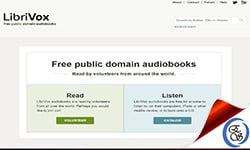
This digital library contains free public domain audiobooks.
Its books are recorded by volunteer readers.
These works have expired copyright terms and are available for public use.
The collection includes many important works from world literature.
Users can listen to or download audiobooks for free.
The archive includes content in many languages, which makes it useful for reading practice, listening practice, and literature exploration.
It can be especially helpful for people who enjoy audiobooks.
It can also support people with visual impairments or anyone who wants to listen while walking, commuting, resting, or doing simple tasks.
Listening to classic literature can improve vocabulary, attention, and language exposure.
It is also a good option for people who say they have no time to read.
Sometimes the book can come with you while your hands are busy.
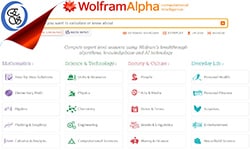
This computational knowledge engine can answer questions, perform calculations, solve equations, analyze data, and provide structured information on many subjects.
It is especially useful in mathematics, physics, engineering, statistics, finance, chemistry, and data analysis.
Unlike a normal search engine, it often tries to compute an answer instead of only showing web pages.
Users can enter equations, formulas, units, dates, words, or questions.
The system then provides direct results, graphs, explanations, or related data when possible.
This makes it helpful for students, researchers, engineers, analysts, and professionals.
It was developed by Stephen Wolfram and is connected to the broader Wolfram technology ecosystem.
For learners, it can be a powerful support tool.
However, it should not be used as a shortcut to avoid understanding the subject.
Getting the answer is nice.
Understanding why the answer is correct is where the real value happens.

This marketplace offers paid and sometimes discounted courses in many different subjects.
These subjects include programming, business, marketing, design, music, photography, personal development, office software, language practice, and many other topics.
Courses usually include video lessons, downloadable materials, quizzes, assignments, and practical exercises.
Users can study at their own pace and access purchased courses whenever they want.
This makes it useful for people who prefer flexible study options.
One important point is course quality.
Because many different instructors can publish content, the quality may vary from course to course.
Before buying a course, it is useful to check the instructor profile, reviews, update date, curriculum, and sample videos.
It can be especially useful for practical skills.
If you want to learn a tool, programming language, software package, or business skill, you can often find suitable content there.
-
edX:

This service offers large-scale courses and career-focused programs.
It was founded in 2012 by Harvard University and the Massachusetts Institute of Technology (MIT).
The service provides MOOCs, which means Massive Open Online Courses.
Courses cover subjects such as science, engineering, mathematics, business, computer science, arts, history, language, and professional development.
Lessons may include videos, quizzes, assignments, readings, projects, and exams.
Users can study at their own pace depending on the course format.
It is useful for learners who want university-level content from recognized institutions.
It can also help professionals improve their skills through certificate programs and career-focused paths.
Like Coursera, it may offer free access to some course materials while certificates or graded components may require payment.
This makes it flexible for both casual study and formal skill development.

This coding resource is designed to make programming easier to study through practice.
It offers interactive courses in programming languages and technologies such as Python, JavaScript, Ruby, HTML, CSS, SQL, and more.
Users can write code directly in the browser.
This makes the process more practical than only watching videos.
It is suitable for beginners as well as learners who want to improve specific technical skills.
It can help users understand programming basics, web development, data analysis, computer science concepts, and career-oriented coding paths.
For people who want to start a programming career, it can be a helpful first step.
However, practice should not stop inside the tool.
Real projects, problem solving, documentation reading, and portfolio work are also important.
Coding is one of those things where watching someone else type is not enough.
At some point, your keyboard must suffer too.
How to Choose the Right Resource
Choosing the right option depends on your goal.
If you want school-level support, Khan Academy is a strong choice.
If your goal is language practice, Duolingo can help build a daily habit.
If you want academic courses from universities, Coursera and edX are more suitable.
If you want practical courses on software, design, business, or personal development, Udemy can be useful.
If you want programming practice, Codecademy is a good starting point.
If you want ideas and inspiration, TED is valuable.
If you want free audiobooks, Librivox is a strong option.
If you need computational answers, Wolfram Alpha can be very helpful.
The best option is not always the most famous one.
The best option is the one that matches your current need and keeps you consistent.
Final Thoughts
These 9 resources can support self-improvement in many different ways.
They can help students review school subjects, professionals improve their skills, language learners practice daily, and curious people explore new ideas.
Khan Academy, Duolingo, Coursera, TED, Librivox, Wolfram Alpha, Udemy, edX, and Codecademy each offer different benefits.
Some are better for structured lessons.
Some are better for practical skills.
Some are better for inspiration, language practice, or self-study.
The important thing is not only collecting resources.
The real value comes from using them regularly.
A bookmarked page does not teach anything by itself.
Sadly, the browser has not yet developed guilt-based study technology.
So choose a resource, set a realistic goal, and use it consistently.
I hope it is helpful.
Best regards.