

Finnish Education Model: 6 Secrets of Its Success
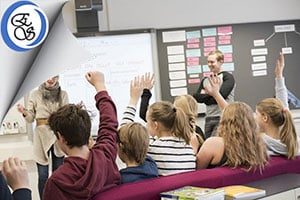
The Finnish Education Model is often shown as one of the most successful examples of modern education in the world.
Finland has created a system that focuses on equality, student well-being, teacher quality, flexible learning, and trust-based school culture.
In Finland, schools are free and all students are given equal access to education.
The system is designed to help every student discover their own potential without discrimination.
This approach does not treat education only as exam preparation.
Instead, it sees education as a long-term process that supports academic, social, emotional, and personal development.
The education system in Finland includes several types of schools and learning paths that students can choose from.
In addition to basic education institutions such as primary school, lower secondary school, and upper secondary school, Finland also has vocational schools and universities.
After upper secondary education, students may choose university education or vocational education depending on their interests and career goals.
This flexibility is one of the reasons why the Finnish system is widely discussed around the world.
In this article, we will examine the 6 main secrets behind its success, along with its advantages, limitations, and common misconceptions.
1. Equal Access to Education
One of the strongest features of the Finnish Education Model is equal access.
Education is publicly funded, and students are not separated by family income, social class, or school fees.
This creates a more balanced learning environment where every child can benefit from the same general opportunities.
Free education is not only about removing tuition fees.
It also means reducing the barriers that prevent children from participating fully in school life.
When students have access to education regardless of their background, the system becomes more inclusive.
This supports social justice and gives students a fairer chance to develop their abilities.
In many countries, educational success is strongly linked to family income or private school access.
Finland’s approach tries to reduce this gap by making public education strong, accessible, and reliable.
This does not mean every student has the same personality, pace, or interest.
It means the system tries to give every student a meaningful chance to learn and grow.
2. Strong Role of Teachers
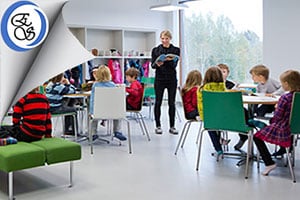
Teachers play a central role in Finland’s education system.
They are not only responsible for explaining subjects in the classroom.
They actively guide students throughout the learning process.
Teachers communicate with students regularly to understand their needs, difficulties, strengths, and learning habits.
This makes the teacher-student relationship more personal and supportive.
In Finnish schools, teachers do not rely only on traditional teaching methods.
They use different approaches based on the learning styles and interests of students.
Lesson plans are prepared by considering how students learn, what they are interested in, and where they need support.
This does not mean the classroom is uncontrolled or random.
It means teachers have professional freedom to design lessons more effectively.
Another important point is assessment.
Teachers in Finland use different evaluation methods to follow student progress.
They do not make decisions only based on exam results.
Instead, they continuously observe student development and adjust lesson plans according to student needs.
This creates a more flexible and humane learning process.
Of course, that does not mean students live in a magical land where exams never exist and everyone learns by staring peacefully at snow.
But the system gives more importance to growth, feedback, and long-term development than constant testing.
3. Public Financing and Social Support
Finland’s education system is financed by the state.
Because education is accessible without tuition fees, all students can benefit from it more equally.
This public financing model supports the idea that education is a public good, not only a private investment.
The goal is to make sure that students are not excluded because of financial limitations.
A strong public system also reduces the pressure on families to search for expensive alternatives.
When public schools are trusted, families do not feel forced to depend on private schools or costly tutoring.
This helps create a more balanced education culture.
In Finland, the success of a school is not supposed to depend only on how wealthy the neighborhood is.
This is one of the reasons why the Finnish system attracts international attention.
Public financing also supports teacher training, learning materials, student services, and school development.
When these areas are planned together, the education system becomes more consistent.
4. Less Pressure, More Meaningful Learning
Another important secret behind the success of Finnish schools is the learning environment.
Students generally experience less pressure compared with highly exam-centered systems.
Homework is often more limited, and the school culture gives importance to rest, play, movement, and interaction.
Students are encouraged to participate, ask questions, work together, and express their ideas.
This supports active learning instead of passive memorization.
The classroom is not designed only for silent note-taking.
Students are allowed to move, communicate, and collaborate when the learning activity requires it.
This approach helps students develop social skills as well as academic knowledge.
It also reduces unnecessary stress and supports a healthier attitude toward school.
The model encourages students to develop curiosity instead of seeing education as a punishment system with fluorescent lights.
That is a small detail on paper, but a massive difference in real life.
Students who enjoy learning are more likely to continue learning independently.
This is one of the strongest long-term advantages of the Finnish approach.
5. Flexible Learning Paths
The Finnish education system gives students different learning and career paths.
After upper secondary education, students may continue to university or choose vocational education.
This is important because not every student has the same goals, talents, or interests.
Some students may want an academic career, while others may prefer a practical profession.
A good education system should not force all students into one narrow path.
Finland’s structure gives vocational education a respected place within the system.
This helps students choose a direction that matches their abilities and future plans.
Flexible pathways also reduce the idea that success has only one form.
University education is valuable, but it is not the only meaningful option.
Vocational training can also lead to strong careers, practical skills, and social contribution.
This balance is one of the reasons why the Finnish model is often praised in international discussions.
6. Focus on Student Well-Being and Creativity
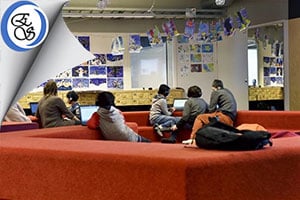
The Finnish model supports an approach that helps students discover themselves and develop a positive attitude toward learning.
Lesson plans can be shaped according to student interests and learning styles.
Teachers actively participate in the learning process and guide students as individuals.
This model allows students to express themselves and discuss different ideas.
As a result, students can better understand themselves and the world around them.
Creativity is also an important part of this approach.
Encouraging creative thinking helps students improve innovation and problem-solving skills.
These skills are valuable not only in school but also in working life.
The system also tries to reduce student stress.
Physical activity is encouraged in schools, and students are guided toward a healthier lifestyle.
Healthy routines, balanced learning, and supportive classroom environments help students feel better both mentally and physically.
Another advantage is that students can develop a more positive attitude toward learning.
When students are not constantly pressured by exams, they may participate more actively in the learning process.
This can make education more enjoyable and meaningful.
For a broader perspective on international student assessment, you can also read the related article about the PISA exam.
Finland’s Educational Success
Finland has long been considered one of the successful countries in education.
Its performance in international assessments such as PISA has made the Finnish system a popular topic among educators, policymakers, and researchers.
This success is often connected with teacher quality, equal access, student-centered learning, and a strong public education structure.
However, the system should not be romanticized as a perfect model without problems.
Every education system has strengths and weaknesses.
Finland’s success should be studied carefully, not copied blindly.
What works in one country may need serious adaptation in another country.
Culture, economy, teacher training, public trust, population structure, and political decisions all affect how an education model works.
Differences Between Finland and Many Other Countries
The Finnish model differs from many education systems around the world.
Students often spend less time under heavy academic pressure, and homework is more limited compared with some exam-centered systems.
Students are also encouraged to move, interact, and work together in the classroom.
This creates a school culture that supports cooperation rather than only competition.
Another difference is the importance given to student independence.
Students may use public transportation, bicycles, or walking depending on their age, location, and local conditions.
This can support responsibility and self-confidence.
The system also encourages healthy habits, physical activity, and balanced daily routines.
These details may look small, but they affect the overall learning culture.
Advantages of the Finnish Education Model
The Finnish Education Model has several advantages.
First, it supports equal opportunity by giving every student access to free education.
This strengthens educational equality and social justice.
Second, it gives teachers an active and respected role in student development.
Teachers guide students individually and help them manage their own learning process.
This supports independence and responsibility.
Third, the system encourages self-expression and discussion.
Students can share different ideas and learn to understand different perspectives.
This can improve communication skills and critical thinking.
Fourth, creativity and problem-solving are supported.
Students are encouraged to think, question, explore, and produce ideas.
These skills are important for innovation and future working life.
Fifth, the model aims to reduce stress.
Schools encourage physical activity and healthier routines.
This supports student well-being and may improve motivation.
Finally, the model helps students develop a more positive relationship with learning.
When learning becomes meaningful, students may participate more actively and enjoy the process more.
Disadvantages of the Finnish Education Model
Like every education system, the Finnish model also has disadvantages and limitations.
Possible challenges include limited cultural diversity in some contexts, high living costs for university students, foreign language learning concerns, and debates about competitiveness in exam-based environments.
Being aware of these limitations is important for countries that want to learn from Finland.
A successful model cannot be copied like a file from one folder to another.
Education systems are tied to culture, economy, teacher quality, public policy, and social expectations.
-
Limited Cultural Diversity
Finland has historically had a relatively lower immigrant population compared with some countries.
Because of this, the education system may face challenges when adapting to highly diverse student populations.
If students from different cultural backgrounds are not given enough opportunities to share and understand cultural differences, problems such as exclusion or discrimination may occur.
This does not mean the Finnish system cannot support diversity.
It means diversity requires active planning, teacher preparation, inclusive materials, and strong school policies.
-
High Living Costs in Higher Education
University education in Finland can be tuition-free for many students, depending on their status and program.
However, students may still face high living costs.
These costs may include accommodation, food, transportation, books, and daily expenses.
University admission may also require strong academic performance.
This can make access to higher education more difficult for some students.
-
Foreign Language Learning Challenges
The Finnish education system offers foreign language learning opportunities.
However, if students do not reach a strong level in foreign languages, they may have limited access to education or career opportunities abroad.
This can be a disadvantage in a world where foreign language skills are important in business, technology, science, and academic life.
For this reason, language education remains an important subject for the future of Finnish schools.
-
Debates About Exam-Based Competitiveness
The Finnish system is not heavily based on frequent standardized testing.
It gives importance to self-assessment, teacher observation, and student development.
However, some critics argue that this approach may be less competitive than highly exam-centered systems.
According to this view, students who are not trained under strong exam pressure may face difficulties in certain international or highly competitive academic environments.
This criticism does not cancel the strengths of the Finnish approach.
It simply shows that every system creates different advantages and different trade-offs.
Common Misconceptions About the Finnish Education Model
-
Is it true that there is no school transportation in Finland and students go to school by themselves?
In Finland, students are often expected to go to school and return home by using suitable transportation options.
However, this does not mean there is no school transportation at all.
Encouraging students to travel independently can help them develop responsibility and learn how to use public resources such as public transportation.
Many schools are located in city centers or populated residential areas.
Therefore, students may use public transportation to reach school.
Finland has a wide public transportation network, and students may use buses or other local transportation options when they are not taken to school by parents or relatives.
Some students may also prefer cycling or walking to school, especially if they live close to the school.
The exact situation can change depending on the student’s age, location, distance, and local rules.
-
Is part-time work for students a formal part of the education system?
Part-time work for personal allowance is not a formal part of Finland’s education system.
The system generally encourages students to focus on their education full-time.
For this reason, it does not officially promote part-time work as a required educational practice.
However, some upper secondary students in Finland may work part-time.
This can help them earn their own money and gain experience about working life.
Still, this should not be confused with an official part of the education model.
It is more accurate to describe it as an individual choice or social practice rather than a formal educational requirement.
Final Assessment
The Finnish Education Model is successful because it combines equality, teacher quality, flexible learning, student well-being, public support, and trust-based education culture.
Its 6 main strengths show that education does not have to be built only around exams and pressure.
A strong system can also focus on curiosity, creativity, independence, and long-term development.
However, Finland’s model should not be treated as a perfect formula that can be copied directly by every country.
Each country has different economic, cultural, political, and social conditions.
The real lesson is not “copy Finland exactly.”
The real lesson is to understand why the system works and adapt those principles wisely.
Equal opportunity, strong teachers, flexible learning, student well-being, and meaningful education are valuable goals for every country.
When these principles are applied carefully, education can become more effective, fair, and human-centered.
Best regards.