

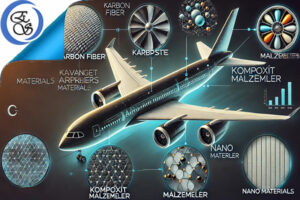
 The aviation industry and aircraft design are fields that constantly advance through the development of new technologies and materials. Engineers are searching for innovative solutions every day with goals such as producing lighter, stronger, and more efficient aircraft, increasing fuel savings, and reducing environmental impact. The materials used in aircraft design are among the most important parts of this search. From past to present, the materials used have continuously improved and evolved. In this article, we will examine the 5 most important innovative materials used in aircraft design and the contributions they provide to the aviation industry.
Carbon Fiber: The Combination of Lightness and Durability
Carbon fiber is considered a revolutionary material in aircraft design. In addition to being durable, its incredibly lightweight structure has made this material widely used in aviation. Since carbon fiber is lighter than metal, it significantly reduces aircraft weight and improves fuel efficiency. Using lightweight materials allows aircraft to travel longer distances with less fuel. This helps reduce costs for airlines while causing less harm to the environment.
Uses of Carbon Fiber in Aircraft Design
Carbon fiber can be used in many parts of an aircraft. Wing structures, the tail section, and the fuselage are among the areas where this material is frequently used. For example, modern aircraft such as the Boeing 787 Dreamliner and the Airbus A350 make extensive use of carbon fiber composites. These aircraft consume 20–30% less fuel compared to aircraft made with traditional metals.
Composite Materials: The Strength of Different Materials
Composite materials are defined as multilayered structures formed by combining different materials. These materials provide superior performance compared to the properties of a single material alone. The lightness, durability, and flexibility of composites make them an excellent option in aircraft design. Such materials display far superior characteristics compared to traditional metal alloys used in the aviation industry.
The Contributions of Composite Materials to Aircraft
One of the greatest advantages composite materials provide to aircraft is high durability and low weight. These materials allow an aircraft to be both lightweight and strong. While aircraft that consume less fuel can be produced by using lightweight materials, their durability also makes aircraft maintenance less costly and extends service life. In addition, the greater corrosion resistance of composite materials provides major advantages in the long-term use of aircraft.
Aluminum-Lithium Alloys: The Lightweight Version of Metal
Aluminum has been used in aircraft design for many years. However, aluminum has one disadvantage: no matter how light it is, it can still create a weight issue compared to more durable materials. This is where aluminum-lithium alloys come into play. Aluminum-lithium alloys are much lighter than conventional aluminum while still offering high durability. This makes them preferred for lighter and more efficient aircraft designs.
The Benefits of Aluminum-Lithium Alloys for Aircraft
Aluminum-lithium alloys are used especially in fuselage structures and wings in modern aircraft. Thanks to their lightweight structure, they improve aircraft fuel efficiency and help aircraft travel longer distances. In addition, because this material is more durable at low temperatures, it offers an ideal material option for aircraft flying at high altitudes.
Titanium: A Material Resistant to High Temperatures
Titanium is one of the most durable and heat-resistant materials used in aircraft design. It is especially known for its use in aircraft engines and landing gear. Titanium is much lighter than steel, yet it offers similar durability. In addition, its ability to maintain strength at high temperatures makes it an ideal material for use in critical areas such as engine components.
The Contributions of Titanium to Aircraft Design
Because titanium is resistant to corrosion, it helps aircraft last longer. When this material is used in engines and landing gear, which operate under the highest stress, it reduces maintenance costs in long-term use. Thanks to its high-temperature resistance, it improves aircraft engine performance and reduces fuel consumption.
Nanomaterials: The Aviation Material of the Future
In recent years, nanomaterials have attracted attention as materials with the potential to revolutionize aircraft design. Nanomaterials are materials structured at the atomic level, and they are much lighter, stronger, and more flexible compared to traditional materials. When used on aircraft surfaces, they reduce friction and allow aircraft to fly more efficiently. In addition, these materials have the potential to significantly reduce energy consumption.
The Innovations Nanomaterials Bring to Aviation
One of the biggest advantages of nanomaterials is that they can be used on aircraft surfaces. In this way, the friction created by air on the aircraft fuselage is reduced, allowing aircraft to fly faster and more efficiently. Nanomaterials also reduce aircraft weight, increase fuel savings, and lower carbon emissions. In the future, nanomaterials are expected to become widely used in aircraft and create a major transformation in the aviation industry.
More Efficient Aircraft with Innovative Materials
The materials used in aircraft design make a major contribution to making the aviation industry more efficient, more environmentally friendly, and more sustainable. Carbon fiber, composite materials, aluminum-lithium alloys, titanium, and nanomaterials are among the main actors of this transformation. With the further development of these innovative materials in the future, it will be possible to produce lighter and more durable aircraft, moving the aviation industry further forward in terms of both cost and environmental impact.