

Nokia Failure Reasons: 5 Causes Explained
Nokia was founded in 1865 in Tampere, Finland, as a forest products company.
In its early years, the company focused on paper, rubber, cables, and other industrial products.
Its journey into mobile technology began much later, especially from the 1960s onward.
The brand introduced its first mobile phone in 1982 and eventually became one of the most powerful names in the global mobile phone market.
For many people, especially those who grew up in the 1990s and early 2000s, the name still means durability, simplicity, and unforgettable ringtone trauma.
However, the story did not continue in the same direction forever.
Nokia Failure Reasons are still discussed today because the company was once a giant in mobile phones but lost its dominant position after the rise of smartphones.
This article examines the company’s history, rise, decline, and the 5 main reasons behind its failure in the mobile phone market.

The History and Origins of Nokia
The company’s roots go far beyond mobile phones.
It started as an industrial business and expanded into different sectors over time.
Before becoming famous for mobile devices, it had already worked in areas such as paper, rubber, cables, electronics, and telecommunications.
This broad industrial background helped the company build technical capability and business experience.
Its mobile technology activities gained momentum in the second half of the twentieth century.
By the 1980s and 1990s, the company became increasingly visible in the phone market.
Eventually, it turned into one of the most recognized technology brands in the world.
The company’s rise was not accidental.
It offered practical, durable, and user-friendly devices at a time when mobile phones were becoming more common.
For a long period, this strategy worked extremely well.
Nokia’s First Mobile Phone
The first mobile phone produced by the company was the Mobira Senator, released in 1982.
This device was very different from the mobile phones people later carried in their pockets.
It weighed around 9 kilograms and was designed mainly for use in cars.
So yes, calling it “mobile” was technically correct, but your pocket would strongly disagree.
Still, the Mobira Senator was an important step.
It showed that the company could move into mobile communication and build products for a developing market.
This early experience helped prepare the ground for future success.
The Popularity of Nokia Phones
During the 1990s and early 2000s, the company’s phones became extremely popular around the world.
They were known for their durability, long battery life, simple menus, and affordable prices.
Many users preferred them because they were reliable and easy to use.
At that time, the phone market was not yet dominated by modern app ecosystems.
Most users wanted strong signal quality, good battery life, clear menus, SMS, calls, and a device that would survive falling from a table like it was personally offended by gravity.
The brand delivered exactly that.
Its devices reached millions of users and became part of daily life in many countries.
This popularity created strong customer loyalty.
For years, the company was seen as the safe choice in mobile phones.
The Company’s Market Rise
At the end of the 1990s and the beginning of the 2000s, the company experienced a major rise in the mobile technology sector.
In 2000, it became one of the world’s best-selling mobile phone manufacturers.
Its devices were used across many regions and different customer groups.
This success also increased the company’s market value and global influence.
The brand became a symbol of mobile communication.
For a while, it looked almost impossible to imagine the market without it.
But technology markets rarely reward comfort for too long.
When user expectations change, yesterday’s advantage can quickly become today’s burden.
The Symbian Operating System

The company used the Symbian operating system for many years.
Symbian played an important role in the popularity of its mobile phones, especially in the early 2000s.
At that time, it was suitable for many phone models and supported several smart features.
However, the market changed rapidly after the arrival of iOS and Android.
Modern smartphones were no longer only about hardware.
They were about software experience, app stores, developer ecosystems, touch interfaces, and continuous updates.
Symbian struggled to compete with this new direction.
As competitors improved their operating systems and app ecosystems, the Finnish company began to lose ground.
The Lumia Series
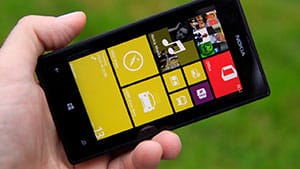
As interest in Symbian declined, the company launched the Lumia series in 2011.
The Lumia phones used Microsoft’s Windows Phone operating system.
The series attracted attention with its design and camera features.
Some Lumia models were genuinely impressive, especially in photography.
However, strong hardware and good cameras were not enough to save the company’s position in the smartphone market.
The main issue was the ecosystem.
Android and iOS already had stronger developer support, larger app stores, and wider consumer adoption.
Windows Phone entered the race late and struggled to attract enough users and developers.
As a result, the Lumia series helped the brand stay visible, but it could not fully reverse the decline.
The Microsoft Deal

In 2014, the company sold its mobile phone business to Microsoft.
This deal included the Lumia series and the mobile device division.
By that time, the company had already moved far away from its former leadership position in mobile phones.
The sale marked a major turning point.
It showed that the brand could no longer compete in the smartphone market with its existing strategy.
After this period, the company focused more on other areas such as telecommunications infrastructure, network technologies, digital mapping, and related business fields.
Other Business Areas
After losing its mobile phone leadership, the company shifted toward other sectors.
It focused on telecommunications networks, digital infrastructure, mapping technologies, and other technical fields.
This move was important because the company did not disappear completely.
It changed direction.
Today, the brand is still known in technology and telecommunications, especially in network infrastructure and 5G-related work.
So the story is not simply “the company failed and vanished.”
The more accurate explanation is that it lost the mobile phone war but continued to exist in different technology markets.
Return to the Phone Market
In 2017, the brand returned to the mobile phone market through a partnership with HMD Global.
Under this structure, new phones were produced under the Nokia name.
These devices often focused on price-performance balance, durability, and simple user experience.
This helped the brand regain some visibility among smartphone users.
However, this return did not recreate the old dominance.
The modern smartphone market had already become extremely competitive.
Companies such as Apple, Samsung, Xiaomi, and many other Android manufacturers had already built strong positions.
5G and New Technology Work
The company has also worked on 5G networks and other innovative technologies in recent years.
Its experience in telecommunications infrastructure made this direction natural.
5G, cloud technologies, the Internet of Things, and artificial intelligence are among the areas connected to its future strategy.
In this sense, the brand still has technological value.
However, the public memory often focuses on the mobile phone decline because that was the area where consumers knew the company most closely.
That is why the question “Why did it fail?” still attracts attention.
Why Did Nokia Fail?
The famous statement attributed to former CEO Stephen Elop summarizes the emotional side of the decline:
“We did not do anything wrong, but somehow, we lost.”
This sentence is powerful because it reflects a painful business reality.
A company may not make one obvious catastrophic mistake.
Yet it can still lose if the market changes faster than its strategy.
The company did many things right during its strongest years.
It built durable products, reached millions of users, created strong brand recognition, and dominated mobile phones for a long time.
But doing yesterday’s right things for too long can become tomorrow’s mistake.
That is the brutal part of technology competition.
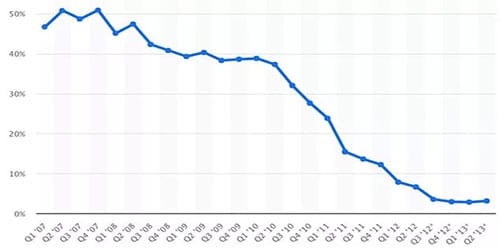
The company’s decline can be linked to several connected factors.
These include slow innovation, strategic hesitation, strong competition, management problems, and unsuccessful partnerships.
Below are the 5 most important Nokia Failure Reasons.
5 Nokia Failure Reasons
1. Not Investing Enough in Innovation
For many years, the company was one of the largest mobile phone manufacturers in the world.
However, it did not respond quickly enough to changing customer expectations.
The smartphone revolution was not only about adding more features to phones.
It changed the entire user experience.
People began to expect touchscreens, modern app stores, fast browsers, rich multimedia, smooth interfaces, and constant software improvements.
The company had strong hardware experience, but it failed to move fast enough in software-centered innovation.
This became one of the biggest reasons behind its decline.
Apple and Android-based manufacturers changed what users expected from a phone.
The Finnish brand continued to rely too much on its older strengths.
Durability and familiarity were valuable, but they were no longer enough.
2. Strategic Decisions
Another major reason was strategy.
The company continued investing in Symbian for too long while competitors moved toward more modern platforms.
It also did not adopt Android at the right time.
Instead, it later chose Windows Phone through its Microsoft partnership.
This decision was understandable from one perspective.
The company wanted to differentiate itself rather than become just another Android manufacturer.
However, the result did not work as expected.
Windows Phone could not create enough market momentum.
It also struggled to attract enough developers.
Without a strong app ecosystem, smartphone platforms become weak.
At that stage, users were no longer buying only a device.
They were buying an ecosystem.
That was the part the company underestimated.
3. Strong Competition
The mobile phone market became much more competitive after the rise of the iPhone and Android.
Apple changed user expectations with the iPhone.
Samsung and other Android manufacturers expanded rapidly with different models and price ranges.
This created pressure from both the premium and affordable segments.
The company was no longer competing only against traditional phone makers.
It was competing against software ecosystems, app stores, touchscreen experiences, brand perception, and developer communities.
That was a completely different battlefield.
Stephen Elop later stated that the company believed one brand might dominate the Android phone sector, which influenced the Microsoft decision.
In a sense, the company avoided one competitive battlefield and entered another one that was even harder to win.
Competition did not wait politely.
It moved fast, took users, attracted developers, and changed the rules.
4. Management Problems
Management issues also contributed to the decline.
Large companies can become slow when they dominate a market for too long.
Success can create internal confidence, but it can also create resistance to change.
In the company’s case, strategic delays, leadership changes, internal complexity, and hesitation weakened its response to the smartphone shift.
Technology markets require fast and clear decision-making.
When the market is moving quickly, slow internal decisions can become expensive.
It is not enough to see the change.
A company must act at the right time.
If management spends too long discussing whether the ship is turning, the iceberg does not pause for the meeting.
5. Failed Partnerships
The Microsoft partnership was one of the most important strategic moves in the company’s later mobile phone period.
The goal was to create a strong alternative to iOS and Android.
In theory, the idea had logic.
The company had hardware experience and brand recognition.
Microsoft had software power and resources.
But the partnership did not produce the expected market success.
Windows Phone failed to gain enough global market share.
App availability remained a problem.
Developers had less motivation to build for a smaller platform.
Consumers, in turn, had less reason to choose a platform with fewer apps.
This created a difficult cycle.
The partnership helped produce interesting phones, but it could not rebuild the company’s former dominance.
Which Reason Was the Most Important?
Among all these factors, the most important reason was the lack of effective innovation at the right time.
This is the core of Nokia Failure Reasons.
Technology changes quickly, and customer expectations change with it.
The company did not adapt fast enough to the smartphone era.
It continued to rely on older strengths while the market moved toward software, apps, touch interfaces, and ecosystem-based competition.
The arrival of iPhone and Android made this weakness much more visible.
Symbian could not keep up with the new expectations.
The later Windows Phone strategy also failed to close the gap.
So the problem was not only one wrong operating system choice.
The deeper issue was the inability to understand and lead the next phase of mobile technology.
Past success created confidence, but it also slowed adaptation.
This is a lesson for all companies, investors, and entrepreneurs.
Being a market leader today does not guarantee leadership tomorrow.
Business Lessons from Nokia’s Decline
The company’s story offers several lessons for technology businesses.
First, innovation should not stop when a company becomes successful.
In fact, success is exactly when innovation becomes even more important.
Second, customer expectations should be watched carefully.
Users do not stay loyal forever if competitors offer a better experience.
Third, software and ecosystem strategy can be as important as hardware quality.
A strong device may fail if the platform around it is weak.
Fourth, strategic partnerships must create real market value.
Big names alone do not guarantee success.
Finally, companies must accept that technology markets can change faster than internal comfort zones.
That is the painful truth.
The market does not care how successful a company used to be.
It only asks what value the company creates now.
Conclusion
Nokia Failure Reasons show how even a global leader can lose its position when technology, user behavior, and competition change rapidly.
The company had a powerful brand, strong hardware experience, and massive global recognition.
However, it could not adapt quickly enough to the smartphone revolution.
Slow innovation, strategic mistakes, strong competition, management problems, and failed partnerships all contributed to the decline.
The most important reason was the failure to invest in the right kind of innovation at the right time.
The company’s past and present also show that failure in one market does not always mean total disappearance.
After leaving its former mobile phone dominance behind, the brand continued in telecommunications networks and new technologies.
Its later return to phones through HMD Global also kept the name visible for many users.
Still, the old dominance was gone.
This story is a strong reminder for businesses and investors.
A company can be a legend in one era and fall behind in the next if it cannot adapt.
Technology does not wait for nostalgia.
It moves forward, whether the old king is ready or not.
What do you think was the biggest reason behind this decline?
You can share your thoughts in the comments.