

Our Nation Mourns: Earthquake Reality and Precautions
The February 6 Earthquakes and Our Condolences
On 6 February 2023, two devastating earthquakes struck Türkiye, centered in Pazarcık and Elbistan, Kahramanmaraş.
The disaster affected a very large region and left deep wounds in our country’s collective memory.
According to official statements shared after the disaster, 11 provinces, 124 districts, and 6,929 villages and neighborhoods were heavily affected.
Tens of thousands of people lost their lives, and more than one hundred thousand people were injured.
You can review the official statement from the Ministry of Interior.

I sincerely wish that such a disaster will never happen again.
May Allah have mercy on those who lost their lives, and may the injured recover as soon as possible.
I also hope that every person affected by this disaster finds strength, support, shelter, and healing.
After the earthquakes, our citizens, aid organizations, public institutions, non-governmental organizations, volunteers, and many countries around the world mobilized to help.
This solidarity showed one of the strongest sides of humanity.
There were many organizations coordinating aid and relief efforts.
For those who want to support disaster relief and humanitarian work, three important organizations are listed below:
Turkish Red Crescent AFAD AHBAP
I truly wish there had never been a need to write such an article on this website.
Unfortunately, disasters remind us that awareness, preparation, responsibility, and proper construction are not optional subjects.
This article is written both as a condolence message and as a general awareness guide.
It does not replace official emergency guidance, engineering evaluation, or professional disaster training.
However, it may help create awareness about the reality of earthquakes and the precautions that should be taken before, during, and after such events.
What Is an Earthquake?
An earthquake is a seismic event that occurs when stress accumulated in the Earth’s crust is suddenly released.
This release may happen along faults and can cause the ground to shake.
The shaking may affect buildings, roads, bridges, vehicles, infrastructure, and people.
Earthquakes are natural hazards.
However, the scale of damage is often closely related to human decisions.
Building quality, ground conditions, structural design, inspection, urban planning, emergency response, and public awareness all affect the result.
In other words, the earthquake itself is natural, but the destruction is not always only a matter of fate.
1. Understand the Reality of Earthquakes
The first step in preparation is accepting the reality of earthquakes.
Türkiye is located in an earthquake-prone region.
This means that individuals, families, building managers, municipalities, engineers, contractors, and public institutions all carry responsibility.
Earthquake awareness should not begin after a disaster.
It should be part of daily life, building design, education, public planning, and home preparation.
A strong Seismic Safety Guide should not only explain what to do during shaking.
It should also remind people that preparation starts much earlier.
Safe buildings, correct planning, emergency supplies, family communication, and proper education can save lives.
2. Prepare Before an Earthquake
Before an earthquake, several precautions can reduce risk and improve survival chances.
Preparation should be practical, realistic, and understood by every member of the household.
-
Identify Safer Areas at Home
Before a disaster happens, identify safer points inside your home.
These may include areas near strong structural elements or places where you can protect yourself from falling objects.
During shaking, unsecured cabinets, shelves, glass, windows, and heavy furniture can become serious hazards.
For this reason, safer areas should be chosen carefully.
AFAD’s official guidance also emphasizes staying away from unsecured cabinets, shelves, windows, and similar objects during an earthquake.
You can review AFAD’s earthquake guidance here: What to Do During an Earthquake.
-
Create an Emergency Plan
A family emergency plan should be prepared before any disaster.
Every family member should know where to go, how to communicate, and where to meet after the event.
The plan should include emergency contacts, meeting points, evacuation routes, and responsibilities.
It should also consider children, elderly family members, people with disabilities, pets, and people who may need medication.
A plan that only exists in one person’s mind is not enough.
Everyone should understand it.
-
Get Earthquake Education
Basic disaster training can make a major difference.
People should learn what to do before, during, and after an earthquake.
Families should discuss possible emergency scenarios in advance.
Schools, workplaces, apartment buildings, and residential sites should also organize drills when possible.
Practice helps reduce panic and makes correct behavior easier during a real emergency.
-
Use Warning and Information Systems Responsibly
Earthquake warning and information systems may provide useful alerts in some situations.
In certain cases, even a few seconds can help people move away from dangerous objects or take a safer position.
However, these systems should not create false confidence.
They are only one part of preparedness.
Safe buildings, emergency planning, and public awareness are still essential.
3. Prepare Building and Site-Level Emergency Equipment
One painful lesson from major earthquakes is that the first hours are critical.
Professional search and rescue teams may not be able to reach every location immediately.
For this reason, apartment and site management teams should consider practical preparedness measures.
With proper management decisions, shared emergency equipment can be placed in accessible and clearly marked locations.
These may include:
- Shovels
- Pickaxes
- Buckets
- Flashlights
- Work gloves
- Crowbars
- Hydraulic jacks, if budget allows
- Metal cutting tools, if budget allows
- Battery-powered radios
- Long-lasting water and basic supplies
The location of this equipment should be known by residents.
It should not be locked away in a place that becomes inaccessible after a collapse.
Marking equipment storage areas clearly can be helpful.
These precautions do not replace professional rescue operations.
However, they may support first response and immediate neighborhood-level action.
4. Prepare an Emergency Kit
An emergency kit should be prepared before a disaster.
It should be placed in an accessible location and checked regularly.
The kit should be updated according to household needs.
Basic items may include:
- Drinking water
- Non-perishable food
- First aid supplies
- Regular medications
- Flashlight and spare batteries
- Power bank
- Whistle
- Battery-powered radio
- Copies of important documents
- Warm clothing
- Blanket or sleeping bag
- Hygiene products
- Cash
- Pet supplies, if needed
The emergency kit should not be prepared once and forgotten forever.
Water, food, batteries, and medicines should be checked periodically.
Expired supplies are not preparation; they are only decoration with false confidence.
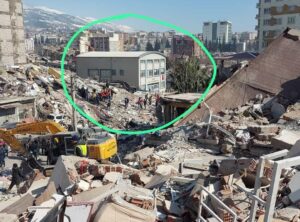
5. Choose and Build Safer Structures
The most effective protection against earthquake damage is not panic during the event.
It is safe construction before the event.
For this reason, building safety is one of the most important subjects in earthquake preparedness.
-
Leave Construction to Qualified Professionals
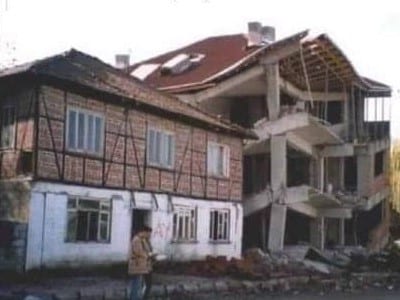
Construction should be carried out by competent, trained, and properly supervised professionals.
Contracting should not be treated as an ordinary commercial activity without sufficient technical responsibility.
Structural safety requires knowledge, experience, ethical responsibility, engineering, and inspection.
Qualifications, financial responsibility, technical competence, and strict supervision should matter.
A building is not only a product.
It is a place where people sleep, raise children, work, and trust their lives to concrete, steel, design, and inspection.
-
Conduct Proper Ground Investigation
Before construction, ground investigation should be performed properly.
The building project should be designed according to ground conditions.
Soil structure, liquefaction risk, bearing capacity, groundwater, slope, and local geological conditions can affect building safety.
A project that ignores ground conditions is incomplete from the beginning.
-
Follow Earthquake Regulations
Buildings should be designed according to current earthquake regulations.
Regulations should also be updated in parallel with scientific knowledge and technological development.
Compliance should not remain only on paper.
Design, material use, construction, inspection, and maintenance must all follow the required standards.
-
Use Quality Materials
Quality materials are essential for structural safety.
Concrete, steel reinforcement, connections, insulation systems, and other materials should be appropriate for the project.
Using weak or unsuitable materials can increase damage during an earthquake.
Additional technologies, such as seismic isolation, may also be considered in suitable projects.
-
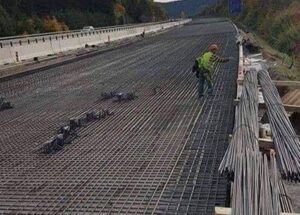
Build a Correct Foundation
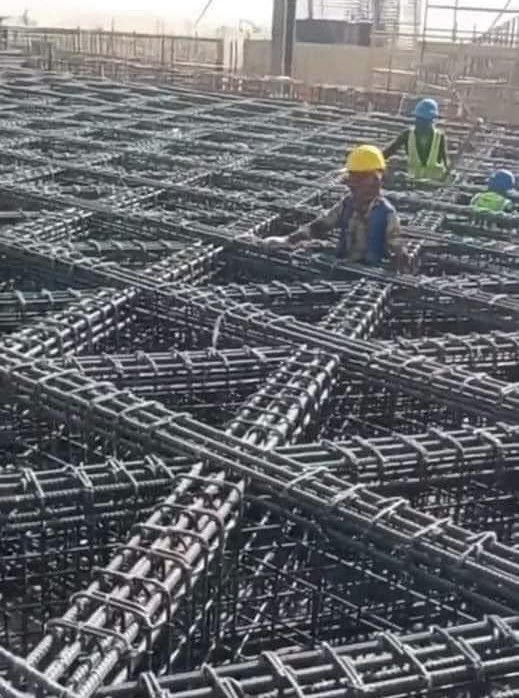
The foundation is one of the most important parts of a structure.
It transfers loads to the ground and helps the building behave safely under different conditions.
A correct foundation must be designed according to the soil report and structural project.
Reinforcement, concrete quality, drainage, and engineering calculations must be handled properly.
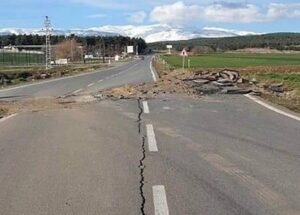
The same logic applies to roads, bridges, and infrastructure.
Earthquake preparedness is not only about buildings.
Transportation routes, emergency roads, hospitals, communication lines, water systems, and energy infrastructure must also be resilient.
-
Design Walls, Beams, and Structural Elements Correctly
Walls, columns, beams, slabs, and connections all contribute to structural behavior.
They must be designed and constructed correctly.
Poor workmanship, missing reinforcement, weak concrete, wrong modifications, and uncontrolled renovations can create serious risk.
Structural changes should never be made casually.
-
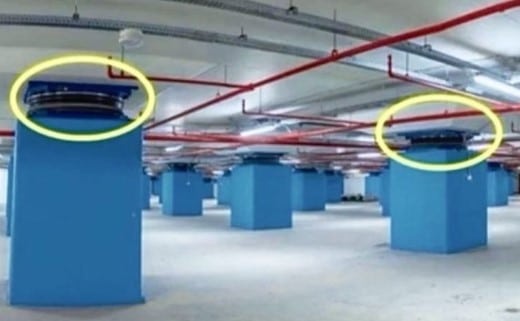
Consider Seismic Isolation Where Suitable
Seismic isolation systems can reduce the transfer of earthquake forces to a building.
They allow the structure to move more safely and may reduce damage in suitable designs.
However, these systems require professional engineering, correct installation, and maintenance.
They are not decorative technology.
They are serious structural systems.
These principles are only a general framework.
Every building and project must be evaluated separately by qualified professionals.
Construction inspection must also be performed properly during the entire process.
6. Know What to Do During an Earthquake
Correct behavior during shaking can reduce injury risk.
However, every situation may be different.
The safest response depends on location, building condition, surroundings, and physical ability.
-
Do Not Panic
Try to stay calm.
Panic can lead to dangerous decisions such as running toward stairs, windows, balconies, or elevators during shaking.
Calm behavior is difficult in such moments, but preparation and drills can help.
-
Drop, Cover, and Hold On
International earthquake preparedness guidance commonly recommends the “Drop, Cover, and Hold On” method.
Drop to your hands and knees.
Cover your head and neck.
If a sturdy table or desk is nearby, take shelter under it.
Hold on until the shaking stops.
You can review this guidance through Ready.gov earthquake preparedness.
-
Stay Away from Dangerous Objects
Stay away from unsecured cabinets, shelves, windows, mirrors, heavy furniture, and objects that may fall.
Furniture should be fixed to walls before a disaster happens.
This simple step can prevent serious injuries.
-
Do Not Use Elevators
Elevators should not be used during or immediately after an earthquake.
Power failure, structural damage, or mechanical problems may trap people inside.
Use stairs only when the shaking has stopped and the route is safe.
-
Decide Carefully Whether to Leave the Building
If the building is safe and the shaking continues, suddenly running outside may expose you to falling glass, facade pieces, roof materials, or other hazards.
If the building is damaged or unsafe after the shaking stops, leaving may be necessary.
This decision should be made according to the situation.
Emergency routes should be known in advance.
7. Act Carefully After the Earthquake
The minutes and hours after an earthquake are also critical.
Aftershocks may occur.
Buildings may be damaged.
Gas, electricity, water, and communication systems may be affected.
-
Check Yourself and Others
First, check whether you or people around you are injured.
Provide first aid only if you know how to do it safely.
Call emergency services if urgent medical help is needed.
-
Check the Surroundings
Look for immediate dangers such as broken glass, unstable furniture, fire, gas smell, electrical hazards, or structural damage.
Do not enter heavily damaged buildings.
Move away from unsafe structures when possible.
-
Control Energy Sources If Safe
If you smell gas or suspect a leak, avoid flames, switches, and electrical sparks.
If it is safe to do so, turn off the gas valve.
Electrical and water systems should also be checked carefully.
If there is danger, leave the area and follow official instructions.
-
Communicate Responsibly
Try to contact family members and confirm that they are safe.
Use text messages when phone lines are overloaded.
Do not spread unverified information.
In disaster situations, misinformation can create additional harm.
-
Take Your Emergency Kit
If you need to leave the building, take your emergency kit if it is safe and accessible.
Do not risk your life to collect belongings.
Documents, supplies, and personal items matter, but human life comes first.
-
Follow Official Instructions
Work with authorities in affected areas.
Follow instructions from official emergency management units.
Do not block emergency roads.
Do not enter disaster zones unless you are authorized or part of an organized aid effort.
Final Thoughts
The 6 February earthquakes reminded us of a painful truth.
Earthquake preparedness is not a subject that can be postponed forever.
It requires safe buildings, proper inspection, public awareness, emergency planning, responsible construction, and social solidarity.
As someone who has experienced the 1999 earthquake, I believe that awareness must not fade after the immediate pain becomes less visible.
Disasters should not only be remembered on anniversaries.
They should change how we build, plan, inspect, prepare, and educate.
This Seismic Safety Guide is only a general awareness article.
Real safety requires professional engineering, official disaster guidance, proper training, and responsible public policy.
Still, even basic awareness can create a difference.
If one family prepares an emergency plan, if one building fixes its unsecured furniture, if one site prepares emergency equipment, if one person learns what to do during shaking, that awareness matters.
Once again, may Allah have mercy on all our citizens who lost their lives.
May the injured recover, and may our nation never experience such pain again.
Our nation’s deepest condolences.
Respectfully.