What Is Neurotechnology? Its Past, Present and Future
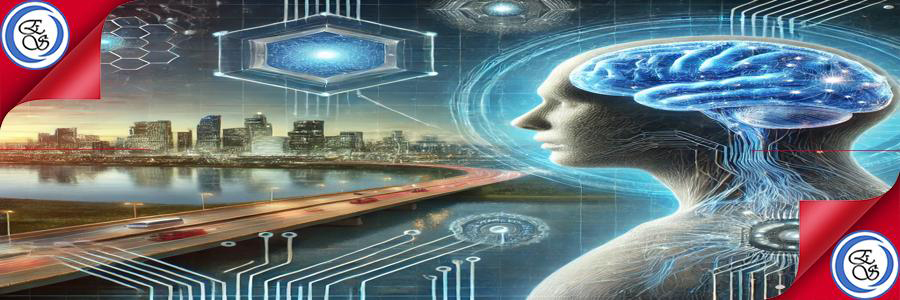
In recent years, the boundaries between technology and the human brain have become increasingly blurred. One of the most striking examples of this is the work carried out by Elon Musk’s Neuralink, which focuses on implanting chips into the human brain. Neuralink aims to build a bridge between the nervous system and computers, potentially carrying the capabilities of the brain to levels that were once unimaginable. So, what is neurotechnology? Where did it come from, and where might it take us?
Shall we do a little mental exercise? 🙂
The Past of Neurotechnology
At the core of neurotechnology lies the idea of understanding and manipulating brain waves. This idea is not new. The first steps of neurotechnology were taken in 1929, when Hans Berger developed electroencephalography (EEG) technology and recorded brain waves. At that time, EEG was used only for medical diagnosis. However, advances in science and technology eventually led to more advanced concepts such as brain-computer interfaces (BCI).
As EEG technology developed, it gradually became integrated with biochips and neural interfaces. This opened the door to more detailed analysis of brain functions and to the manipulation of signals in the brain.
That is how it began yesterday. Now let us take a look at where things stand today.
Neurotechnology Today
Today, companies such as Neuralink are focused on integrating the potential of neurotechnology into human life. Through Neuralink’s work, microchips implanted in the human brain are expected to:
- Help paralyzed individuals regain movement,
- Enable people with vision loss to see again,
- Decode brain functions and allow interaction with machines.
At the same time, this technology, currently used in the medical field, may one day redefine our social lives, entertainment, and even working habits. For example, there are already important developments such as giving robotic prosthetics movement capability through signals coming directly from the brain.
At this point, one cannot help but wonder: in a world of tiny electrical signals and/or vibrations where human-machine and/or machine-human interaction exists, could the same method also be used for human-human interaction? Telepathy, perhaps?
Let us even assume that this becomes possible. While you are in a communication trance with a close friend, could others interfere? Could they hack it? Could bullying become possible? And so on…
Anyway, let us return to the subject.
The Future of Neurotechnology: In My Opinion
Imagine a future in which neurotechnology could completely change human perception. How? Let us try to explain the subject with examples and assumptions. Imagine a future where neurotechnology has the potential to transform human perception entirely. How, you may ask? Let us examine the examples and assumptions more deeply.
Let us say that the brain waves of a person in Norway could be manipulated so that they feel as if they are on holiday in Hawaii. Why not? This would not only be about images; smell, taste, sound and touch could all become part of the experience. Let us go a little further: imagine being able to feel the wind on top of a mountain, the smell of coffee in the city beside you, or the salty coolness of the ocean while sitting where you are. How realistic does it sound to experience things without physically going anywhere? You say it cannot happen? I think you should think again…
From another perspective, individuals may go beyond living in another city and instead continue their lives in an entirely virtual world. The possibilities this technology could bring are almost limitless:
- Learning a new language through data transfers that take only a few seconds,
- Direct brain transfer instead of remote education,
- Optimizing the mental productivity of company employees.
In addition, this futuristic world could revolutionize our tasks and daily efforts. Imagine exercising your muscles without ever going to a gym, or acquiring new skills while sleeping. Isn’t it exciting to imagine what could be done once these technologies become internalized?
Here is an even more futuristic view of the future: it may become possible to remotely experience an earthquake felt in a city, or to feel as if you are walking on the surface of Mars. Such experiences could completely eliminate the need for physical travel.
The Risks of Brain Manipulation
Yes, technology is wonderful, but these futuristic scenarios also bring serious risks. A manipulated mind naturally raises ethical problems:
- Cyber threats such as hacking the brain, as I mentioned above,
- The loss of freedom of thought,
- The possibility that multinational companies may commercialize the mental capacity of individuals,
- I could extend these examples even further, but… 🙂
In addition, if a large part of society cannot keep up with these developments, a digital divide may emerge. What do I mean by this? In fact, we have already begun to experience, even if only gradually, the issue I am trying to emphasize. In other words, can an extremely ignorant segment of society and a segment that is highly competent in technology live together?
In my opinion, it is essential to establish international ethical standards immediately in order to prevent such risks.
Possible Effects on Civil Aviation
Those who read my previous article may remember that in my article titled “Aviation’s 2040 and 2050 Vision: Discovering the Face of Transformation in Civil Aviation,” I asked: “Will people really feel the need to fly this much in the future?” And now, we have arrived exactly at that point.
If these developments will undoubtedly have such a strong effect on social life and on the lives of people and societies, do you think they will have no impact on the aviation industry? In my opinion, the impact may be even greater than expected.
Today’s aviation industry largely exists based on passenger demand. However, if people can experience travel in a virtual environment instead of actually going somewhere, as I described above, would passenger aviation not suffer a serious loss of demand? Just imagine: as I mentioned earlier, a person in Erzurum, during those freezing winter days, suddenly finds himself on a virtual beach. Not only that, but he feels the warmth of the wind, feels the sun burning his skin, smells the iodine scent of the sea, and even dives into the sea, experiencing the sensation of swimming fully. In such a scenario, would holiday demand not decrease?
At the point we have reached today, did we not adapt to online meetings out of necessity during the pandemic? Even in that tiny experience, did we not use the technological possibilities of the time to manipulate our image? Did we not join meetings from a balcony or garden while making the background look like an office? 🙂
Could a grandparent who misses a grandchild, or a grandchild who misses a grandparent, not meet in a near-real format through the technologies I just mentioned? Could similar experiences even be created with people who have passed away, if their image and voice had somehow been recorded?
I know I have extended the subject too much, but this is such a vast topic… I am sure many of you have similar ideas on this and related subjects. I would be very happy if you shared your comments. 🙂
Anyway, let us return to our subject:
In my opinion, in such a scenario, the importance of cargo transportation and logistics may increase even further. Because if passenger demand decreases, this great potential within the aviation industry will have to be channeled somewhere.
Of course, it is not my place to say this, but I cannot help mentioning it: for such a possible future, aviation industry executives need to follow technology more closely and review their plans accordingly even today. (I am sure they are already doing this, of course.) Otherwise, we should not forget the tragic words of Nokia’s CEO that I mentioned in this article >>>: “We did not do anything wrong, but somehow, we lost.”
Failing to catch up with technology in time can bury even a giant company in the dusty pages of history. There are many examples of this…
According to the scenario I have described, which Turkish companies do you think are ready for the future, and which are not? I leave the comments to you.
My humble recommendations for aviation personnel, and especially for aviation managers, are as follows:
- An R&D team that closely follows technological developments should be established.
- Investments should be made in new technologies such as virtual reality that can enrich the passenger experience.
- Logistics technologies should be prioritized in order to maximize the potential of cargo transportation.
Without falling into thoughts such as “as technology increases, failure rates also increase,” the aviation industry should keep pace with developing technology. Remember, people fear what they do not know and approach it cautiously… (Anyway, let us not get into personal development topics 🙂 )
The aviation industry can preserve its leadership in this new world order by adapting quickly to change. However, this will only be possible by adapting to technology in time.
I hope you enjoyed it.
Best regards,