Civil Aviation Innovations: 5 Future Technologies
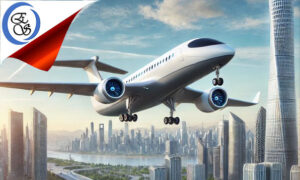
Civil Aviation Innovations are changing how airlines, airports, passengers, and aircraft manufacturers approach the next era of air travel.
The industry is moving toward cleaner propulsion, smarter operations, digital passenger services, and faster transportation models.
These changes are not only about comfort or speed.
They are also connected to environmental impact, safety, operational cost, public trust, and long-term sustainability.
In this article, I will examine five major technologies that may shape commercial flight in the coming years.
You can also read more related articles in the aviation section of my website.
-
Electric Aircraft: Cleaner Regional Flights
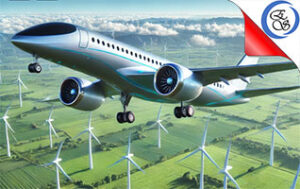
Electric aircraft may become one of the most important tools for reducing emissions on short-distance routes.
As battery systems and electric propulsion improve, manufacturers are looking for practical ways to use this technology in commercial operations.
The first major impact will probably appear on regional flights.
These routes are shorter, so they are more suitable for today’s battery limits.
Electric propulsion may also reduce maintenance needs over time.
Motors with fewer moving parts can make some operations more efficient.
Lower Emissions in Short-Distance Flights
Battery-powered systems can reduce direct carbon emissions during flight.
This makes them valuable for airlines trying to meet environmental targets.
Lower Noise Around Airports
Electric motors are generally quieter than conventional jet engines.
This can reduce noise around airports and nearby residential areas.
For example, Rolls-Royce accelerated its work on fully electric flight through the ACCEL project.
Such projects show that cleaner aviation is moving from theory to practice.
-
Autonomous Aircraft: Automation and Passenger Trust
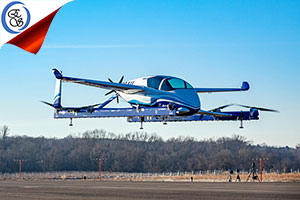
Autonomous aircraft may change how future flights are managed.
Modern planes already use advanced automation in many phases of flight.
The next step is increasing the role of artificial intelligence, sensors, and automatic decision-support systems.
Technically, the sector has made serious progress in this area.
However, the biggest barrier may not be software or hardware.
It may be passenger psychology.
People do not instantly relax when they hear, “The robot is flying the plane.” Shocking, I know.
Automation and Safer Operations
Advanced systems can support pilots during complex conditions.
They can also reduce some mistakes caused by fatigue, distraction, or poor decision-making.
Automation and Air Traffic Management
Digital flight systems may improve route planning and airspace coordination.
This could reduce delays and help flights operate more efficiently.
For this reason, pilotless systems may first become common in cargo operations.
Passenger flights will probably adopt these tools more gradually.
-
Sustainable Aviation Fuels: Cleaner Energy for Flight

Sustainable aviation fuels are one of the most practical solutions for reducing carbon emissions in air transport.
The industry still depends heavily on fossil fuels.
Replacing them completely will not happen overnight.
That is why cleaner fuel alternatives are becoming extremely important.
Biofuels and synthetic fuels are two major options in this field.
They can be used in existing aircraft more easily than many radical engine designs.
Biofuels and Organic Sources
Biofuels can be produced from vegetable oils, agricultural waste, and other organic materials.
They may help reduce the environmental impact of traditional jet fuel.
E-fuels and Renewable Energy
E-fuels are synthetic fuels produced using electricity.
They can be created with hydrogen obtained from renewable energy sources.
Many airline companies have started to test cleaner fuel options.
For example, Lufthansa and KLM have adopted more environmentally friendly fuel strategies on some routes.
-
Smart Airports: Faster Passenger Journeys
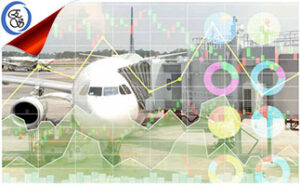
Smart airports are transforming the passenger journey from check-in to boarding.
Digital systems, artificial intelligence, biometric identity checks, and automatic baggage tracking can make travel smoother.
Passengers want shorter lines, clearer information, and fewer stressful surprises.
Airports also want better security, stronger planning, and more efficient operations.
Biometric Systems
Facial recognition can speed up passport control and boarding procedures.
It can also reduce repeated identity checks at different points.
AI-Based Passenger Services
Artificial intelligence can guide passengers inside terminals.
It can also help manage crowds, delays, and service points.
Automatic Baggage Tracking
Thanks to RFID technologyRFID, İngilizce Radio Frequency Identification kelimelerinin baş harflerinden oluşan bir kimliklendirme sistemidir. İçerdiği çip sayesinde radyo frekansı kullanarak nesnelerin belirli bir mesafe üzerinden otomatik tanımlanmasını sağlayarak zamandan tasarruf ve iş verimliliğini artırma amacıyla kullanılmaktadır., luggage tracking can become more reliable.
This may reduce the risk of lost baggage.
That alone could save many people from emotional collapse at the carousel.
Nobody wants their suitcase to start a new life in another country without permission.
-
Hypersonic Aircraft and Space Tourism
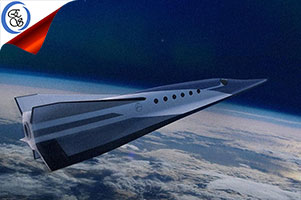
Hypersonic aircraft could change how people define long-distance travel.
These vehicles can move at extremely high speeds.
With this technology, intercontinental journeys may be reduced to only a few hours.
For example, a flight from London to New York could become much shorter than today.
This idea reminds us of past high-speed projects such as the Concorde projectConcorde, süpersonik yolcu uçağı olarak hazırlanmış bir hava taşıtı. Air France ve British Airways tarafından kullanılmış olup, 26 adet üretilmiştir.
25 Temmuz 2000'de dramatik bir kazaya karışması sonucu operasyondan çekilmiştir..
Space Tourism and New Travel Markets
Space tourism is becoming more visible with the rise of private space companies.
Companies such as SpaceX, Blue Origin, and Virgin Galactic are pushing this area forward.
As these initiatives grow, commercial travel may slowly expand beyond traditional routes.
This would change both the technical and economic meaning of passenger transport.
Civil Aviation Innovations: Transformation and Expectations
The air transport sector is going through a major transformation.
Cleaner propulsion, automation, alternative fuels, digital airports, high-speed travel, and orbital tourism are at the center of this change.
In the future, flights may become cleaner, safer, quieter, and faster.
Passengers may also experience more comfortable travel through digital services and smarter airport systems.
However, these developments depend on more than technology alone.
Regulations, safety standards, public trust, infrastructure investment, and economic feasibility will also shape the next phase of the industry.
In short, Civil Aviation Innovations are not just futuristic ideas.
They are practical steps toward a cleaner, smarter, and more connected travel experience.
Respectfully,